Furniture and home7 min read
Augmented reality for furniture retail: the complete guide
What AR on a furniture product page actually does for shoppers and for returns, which categories it helps most, web AR against apps, how to implement it and how to measure it. The full picture, with links to the detail.
By CharpstAR · 24 Sept 2026

Furniture is the category augmented reality was made for. The product is big, it is bought rarely, it has to fit a specific room, and it comes back when it does not. Every one of those facts is a reason a shopper hesitates on a product page, and every one is something AR can answer on the spot. This guide covers what it does, where it works, what it costs and how to know it is working, with the detail one click away in each section.
What AR does at each step of buying
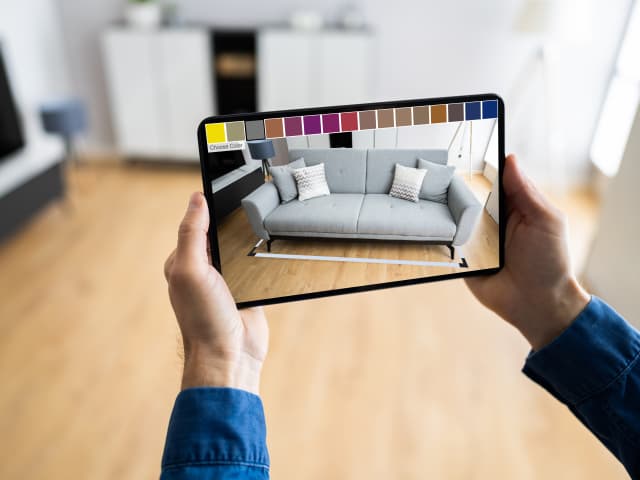
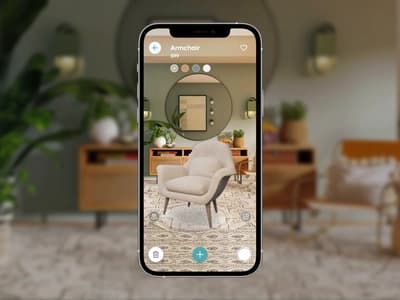
A furniture purchase has a shape: notice, consider, measure, doubt, decide. AR enters at the measuring step and stays until the decision. The shopper taps View in AR, the sofa appears on their floor at real size, and the questions that used to need a tape measure and a leap of faith are answered in ten seconds. Does it fit past the door. Does it block the window. Does the grey clash with the rug.
What changes at each of those steps, and what does not, is in Augmented reality furniture shopping: what changes at each step of the buying journey. What shoppers actually do differently once a page has 3D and AR, measured rather than assumed, is in What shoppers actually do differently when a product page has 3D and AR.
Does it reduce returns?
This is the question every furniture retailer asks first, because a returned sofa costs more to bring back than it earned. The honest answer is yes, for the returns caused by size and fit and colour mismatch, and no, for the returns caused by damage, delivery and changed minds. Knowing which of your returns are which is the first thing to do, and Does AR reduce returns? What the evidence actually says shows how to read the evidence rather than the vendor decks.
The numbers you can actually verify, with a source for each, are collected in AR in furniture retail: the numbers you can actually check and Augmented reality e-commerce statistics, with a primary source for every number. The emissions side, which matters for bulky goods more than any other category, is in Returns, shipping and emissions for bulky goods: what 3D changes and what it does not.
Where it helps most
Not every product needs AR. The categories where it earns its place are the ones where scale is the whole decision.
- Sofas and seating. The biggest ticket, the most returns, the most modules and fabrics. The natural first project.
- Wall art, rugs and lighting. Cheap products, but the purchase is entirely about size in a specific spot. AR answers it. See Wall art, rugs and lighting: the categories where scale is the whole decision.
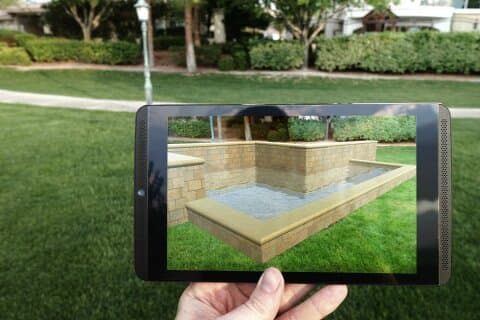
- Outdoor furniture. A short selling season, a terrace nobody measured, and weather. Outdoor furniture AR: terraces, weather and a very short selling season and Placing garden and landscaping products in AR, and where the tracking gives up cover the placement problems that are specific to being outside.
- Home decor in groups. Placing several items in one room is where the technology starts to strain, and Placing several decor items in one room with AR, and where it falls apart is honest about where it falls apart.
The category-by-category view of where AR helps and where it does not is Where AR helps in e-commerce, by product category, and where it does not.
What the model has to get right
AR is only as good as the model behind it. A sofa that is three centimetres too wide in AR will produce exactly the return it was supposed to prevent. Dimensions have to be exact, materials have to read correctly in daylight and lamplight, and the scale has to be locked so the phone cannot get it wrong. What a furniture model has to get right, and what shoppers do with it once it does, is in What a furniture 3D model has to get right, and what shoppers do with it. Accuracy also underpins trust: a shopper who has seen the real thing in their room is a shopper who believes the rest of the page, which is the argument in Augmented reality and trust: accuracy, real scale and honest product information.
Web AR or an app
There are two ways to deliver AR. An app the customer installs, or web AR that opens from the product page in the phone's browser. Apps can do more; nobody installs them. For a retailer the decision is almost always web AR, and the reasons, including the honest capability gaps, are in Web AR or an app: reach, capability, cost, and why nobody installs your app.
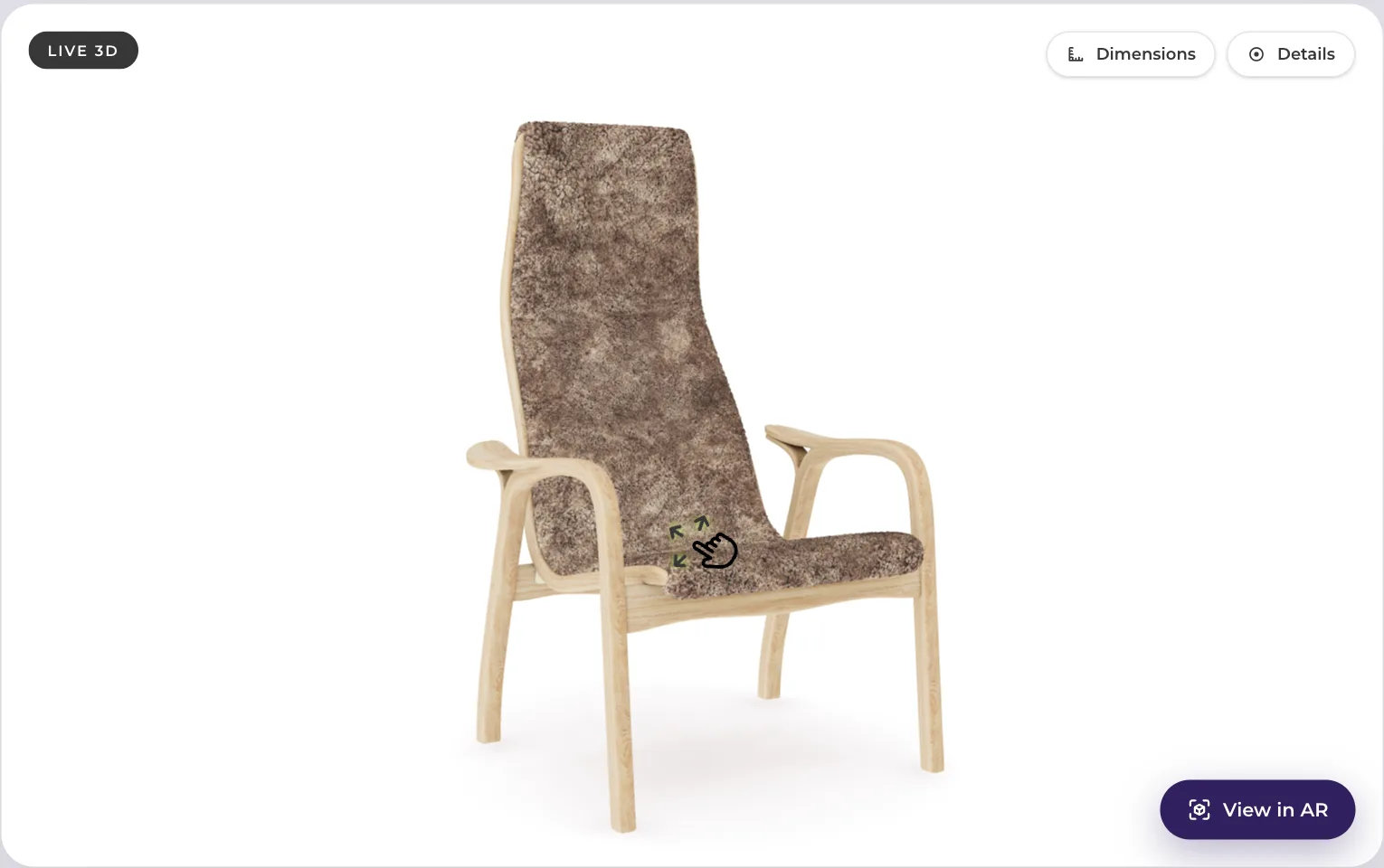
Web AR works through two built-in phone features: AR Quick Look on iPhone and iPad, and Scene Viewer on Android. Both open a model file at real size without installing anything. The step-by-step of what happens when a customer taps the button, on each platform, is What happens when you tap View in AR, step by step on iPhone and Android.
Implementation
For a shop on Shopify, Shopware, Magento or WooCommerce, adding AR to a product page is a script tag and an element in the template. The model files live on a content delivery network. The View in AR button appears on phones that support it and stays hidden on desktops, where a QR code hands the model to the customer's phone instead.
The manager's version, covering what it needs, what it costs and how long it takes, is A manager's guide to web AR: what it needs, what it costs, how long it takes. The technical version, with the formats and the things that commonly break, is How to implement web AR on an e-commerce site: formats, code and what breaks. The design rules for the button, the placement and the fallbacks are in AR on a product page: the do's and don'ts that actually matter.
AR against the alternatives
Interior design apps let a shopper furnish a virtual room. Virtual showrooms let them walk through one. Both sound more impressive than a button on a product page, and both are used far less. Shoppers want to see this sofa in their room, not a sofa in a showroom. The comparisons are in Interior design apps or AR on your product page: which one actually sells and Virtual showroom or AR on the product page: which one shoppers actually use.
Three retailers, told honestly
Sweef sells a modular sofa with combinations no photo shoot could cover. MELIMELI brought the in-store fabric experience to the product page. Contura sells stoves whose variations confused both customers and dealers. Each project is described without the marketing gloss, including what did not work first time, in Three 3D and AR projects, told honestly: Sweef, MELIMELI and Contura. The full case studies are on the site: Sweef, MELIMELI and Contura.
Competing with the marketplaces
A mid-size furniture shop cannot beat a marketplace on range or price. It can beat it on certainty, because the marketplace shows a photo and a returns policy while the shop shows the sofa in the customer's room. Where that edge is real and where it is not is in Competing with marketplaces as a mid-size furniture shop: where 3D helps.
What it costs and how to measure it
The cost of AR is the cost of the model, because AR is the same file shown on a floor instead of a page. With a subscription it is a fixed price per product per month with hosting and updates included; an agency charges per model. The pricing logic is in the 3D models guide.
Measuring it needs three numbers: how many shoppers open AR, how their conversion compares with those who do not, and how their return rate compares. The first two come from analytics events; the third needs the returns data joined to orders, which most shops have never done. The product page audit in A product page audit checklist for furniture and home brands is the place to start, and the 2026 state of the market, separating what changed from what is still hype, is in Furniture AR in 2026: what actually changed, and what is still hype.
Where to start
One sofa, one armchair or one lamp. Get it built, put it on the live page with the AR button, and watch the numbers for a month. If you sell furniture, we will build that first product for you free, as a web-ready model with AR, so the pilot costs nothing but a month of attention. The free sample is here. If you are still deciding whether AR is for your business at all, Should your business use augmented reality? A decision guide, including when not to is a decision guide that includes when the answer is no.
Terms used in this guide
AR Quick Look, Scene Viewer, web AR, GLB, USDZ, real scale and the rest are defined in plain words in the glossary.