Furniture and home8 min read
Outdoor furniture AR: terraces, weather and a very short selling season
Let customers place a garden set on their own terrace before they buy. What AR does for outdoor furniture sales and returns, what it costs and how to add it.
By CharpstAR · 4 Oct 2023 · Updated 19 Oct 2026
Part of Augmented reality for furniture retail: the complete guide
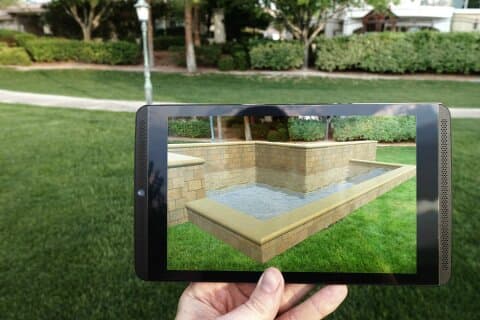
Help your customers see a garden set on their own terrace, at real size, before the season starts.
Imagine shopping online for a six-seat garden dining set on the first warm weekend of the year.
You like the look of it and the price is right, but your balcony has a railing and a door that opens outwards. The product page gives you a width and a depth, and you stand outside with a tape measure trying to picture whether the chairs will still pull out once the table is in place.
For many customers that is where the purchase stops, and in a season that lasts a few weeks a delayed order is usually not placed at all.
Augmented reality (AR) answers the fit question on the product page. Instead of asking customers to measure and imagine, you let them stand the set on their terrace through the phone camera, walk around it and see whether it fits. With CharpstAR, the AR button sits on your existing product page, and on the Value plan the same models give you rendered product images for the season before the stock has arrived.
What Is Augmented Reality for Outdoor Furniture?
Augmented reality for outdoor furniture lets a shopper open a 3D model of your product from the product page and place it in the camera view of their own terrace, balcony or garden at its true size.
With a 3D model and AR on the page, your customers can:
- Place a dining set, lounge set or parasol on their terrace at real scale
- Walk around it and check that doors still open and chairs still pull out
- Turn the model and look at the weave or the powder coat up close
- Read the measurements on the model while it stands in place
- Switch between frame colours and cushion fabrics
- Do all of this from the product page on a phone, with nothing to install
Terraces and balconies are smaller and less regular than the rooms people compare them with, so fit is a sharper question outdoors than indoors.
Why Use Augmented Reality for Outdoor Furniture E-commerce?
Outdoor furniture is bulky and expensive to ship twice, and it sells in a short burst of demand. Every reason a customer has to hesitate costs more here than in most categories.
Increase Conversion at the Moment of Peak Intent
Customers order with more confidence once they have seen the set in the place it will stand. The decision for garden furniture is often made on the terrace itself, in spring, and the AR view meets the customer there. In 2020 Shopify reported that products with 3D or AR content converted 94 percent better than comparable products without it, and its published merchant results include a 65 percent rise in purchases on the pages where Rebecca Minkoff turned AR on.
Reduce Returns of Bulky Items
A garden set that comes back costs you the outbound freight, the return freight and often the product. The NRF and Appriss Retail put the online return rate at 17.6 percent of sales in 2023, and for large outdoor items each percentage point is expensive. When the customer has stood the set on their terrace and checked the measurements, fewer sets are sent back because the size or the look was wrong. In Shopify's merchant results, Gunner Kennels saw a 5 percent reduction in returns after adding AR.
Answer the Materials Question on the Product Page
The second question every outdoor buyer has, after fit, is whether the set will survive the winter. On a 3D model the customer can get close to the material, and hotspots on the model can explain how the finish weathers, whether the cushions are rated for rain and whether the set folds or stacks for storage. That is the information that justifies the price gap between your ranges, and it reaches customers without a call to your support team.
Sell From Day One of the Season and Cut Photography Costs
Rendered product images for a new range come out of the same 3D models as the AR view, so the range can be live on your site and in your catalogue before the containers land. Outdoor lifestyle photography also needs good weather. The Value plan includes five rendered images per model, made in any month, without a shoot. Frame colours and cushion fabrics multiply fast in this category, and one model with a material library covers every combination.
Use Case: A Garden Dining Set Through the Season
Garden furniture is a strong fit for 3D and AR because the same model works for you at every stage of a short season.
| Season stage | What the 3D model does |
|---|---|
| Before the season, no stock yet | Rendered images (five per model on the Value plan) for the site and the catalogue before the product arrives |
| First warm weekend | AR placement on the terrace, when the customer is ready to buy |
| Mid-season | Frame colours and cushion fabrics chosen by the customer on the page |
| Out of season | The same models carry the pre-order and clearance campaigns |
How It Works for Your Customer
- The customer opens your product page on their phone and taps the AR button
- The set appears in the camera view on the terrace at its true size
- They walk around it, check the measurements and change the frame colour or fabric
- They add the set to the cart from the same page
There is nothing for the customer to install. The AR view opens on Android through Scene Viewer on ARCore phones running Android 7.0 or later, and on iPhone through AR Quick Look in Safari from iOS 12 onwards. The order goes through your own checkout as it does today.
How to Add Augmented Reality to Your Outdoor Furniture Website
You keep your existing online shop. The 3D viewer and the AR button go on your product pages, and we handle the models.
Step 1: Send Us Your Products
A link to the product page is enough to start. Photos, drawings or a CAD file help, and close photos of the weave, the wood and the cushion fabrics help us match the finishes.
Step 2: Get a Plan Within a Working Day
We confirm by email within one working day and tell you what we need for your range and what it would cost.
Step 3: We Model Your Sets
A 3D artist models each set and checks it against the real product, with the measurements and the material options built in. You check the models on your own product page before anything goes live.
Step 4: Go Live Before the Season
One snippet on your product page is the whole integration, whatever platform your shop runs on. The first product takes ten working days and a full range takes longer, so the time to start is the autumn before the season you want to sell in.
How to Measure the ROI of AR for Outdoor Furniture
Judge the AR pages by the numbers you already follow:
| KPI | What to measure |
|---|---|
| Conversion rate | How the pages with AR convert during the season compared with the same weeks last year |
| Return rate | Whether fewer sets come back for the wrong size or the wrong finish |
| Customer support questions | How many fewer emails ask about dimensions, materials and winter storage |
| Time to launch | How many days earlier a new range is live and sellable on the site |
| Photography costs | How many outdoor shoots the renders replace |
Every range and every season differs, so compare the same sets against the same weeks last year, or run an A/B test on the pages with AR.
How Much Does Augmented Reality for Outdoor Furniture Cost?
An outdoor range is priced per product and per month. On the Basic plan a garden set costs 10 dollars per SKU per month, with a minimum of 100 variants and a 12-month term, and that figure covers the model, the AR button, hosting and updates. The Value plan is 20 dollars per model per month for 100 models or more over 24 months, and it is the plan that carries the five rendered images per model, the measurements shown on the model and the material hotspots described above. There is no setup fee.
On either plan you can swap up to 30 percent of your sets for new ones each year, which suits a range that changes every season.
Is Augmented Reality Right for Your Outdoor Furniture Business?
AR is worth adding if your products:
- Have to fit a terrace, balcony or garden of a particular size
- Are large and expensive to ship back
- Come in frame colours and cushion fabrics that customers choose between
- Sell in a short season where every week of delay matters
- Depend on materials that are hard to judge from a photo
Common uses include garden dining sets, lounge sets, sun loungers, parasols, planters, outdoor kitchens and garden sheds.
Put Your Garden Range on Your Customers' Terraces
Augmented reality lets outdoor furniture brands answer the questions that stop a sale, whether the set fits and whether it will last, on the product page where the customer is deciding.
Start with one product. Send us your bestselling set before the season and we put it on your product page in 3D and AR within ten working days, at no charge, and the model stays yours either way. You can see the same approach on indoor furniture in our work with Sweef and MELIMELI, the full service is on the solutions page, and the monthly cost per product is on the prices page.
Sources
- Google, Scene Viewer documentation.
- Apple, AR Quick Look.
- Shopify, merchant data on 3D and AR content, September 2020.
- Shopify, AR shopping: Rebecca Minkoff and Gunner Kennels results.
- National Retail Federation and Appriss Retail, 2023 Consumer Returns in the Retail Industry.