Furniture and home3 min read
Which AR furniture ecommerce trends held up by 2026
Web AR through Quick Look and Scene Viewer, configurators, AI-made 3D models and headsets: which furniture AR predictions of the last eight years came true.
By CharpstAR · 4 Oct 2023 · Updated 22 Sept 2026
Part of Augmented reality for furniture retail: the complete guide

If you run e-commerce for a furniture brand, someone has told you every few months for the past eight years that augmented reality is the future. A few of those predictions came true and most didn't.
What has changed
AR opens from the product page
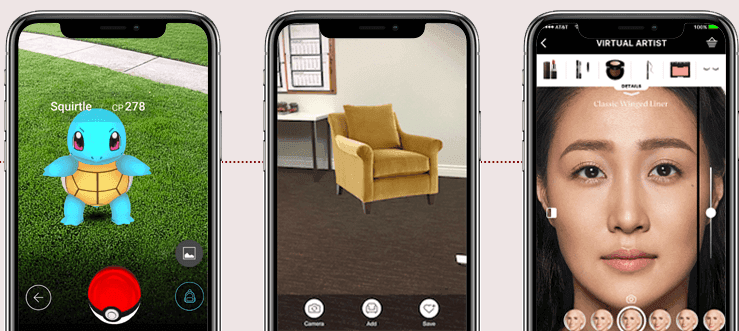
The largest change happened gradually. Both mobile platforms can now open a 3D model in the camera view straight from a web page, Scene Viewer on Android and AR Quick Look on iPhone, iPad and Vision Pro.
Until a few years ago that meant building an app and getting customers to download it. Now the AR view is a button on the product page, with no app to build or get through review. Because the viewer comes with the phone's operating system, the work can sit in the product page budget.
One model for the viewer, AR and still images
A single well-built model gives you the 3D viewer on the page, AR placement on the phone and still images for category pages, emails and ads. A few years ago those were three separate production budgets. It also changes who signs off, since the model can come out of the marketing budget.
Configurators that send the result to the phone
Furniture with variants used to mean a grid of swatch photos. A configurator now recolours and rebuilds the same model live, then sends that configuration to the phone for placement. Sweef does this with modular sofas. The shopper puts a layout together and then places that layout in their own room.
Claims that haven't held up
AR replacing the showroom
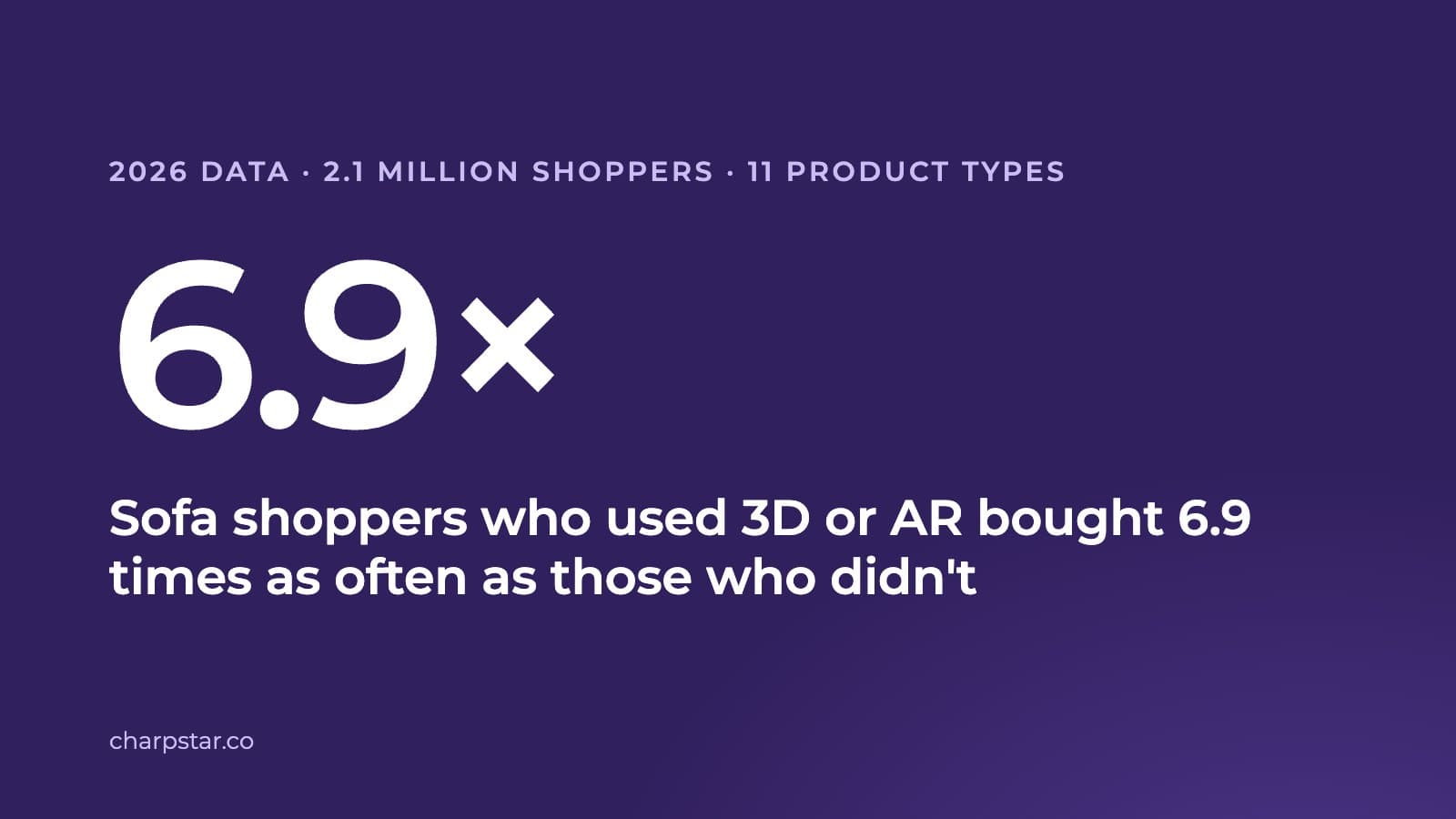
The published evidence doesn't say it will. Shopify's writing on the subject cites research finding that 52 percent of consumers choose in-person shopping over online because they want to experience products in person. AR covers size and placement. Cushion firmness and the feel of the fabric still need the showroom.
AI-generated 3D models on product pages
They are improving quickly and are useful for blocking out a rough shape. We wouldn't put one on a product page yet. The common failure is a model that looks right and has the wrong dimensions, or a join that doesn't exist on the real product, and in furniture the dimensions are what the model is for.
Headsets as a sales channel
Apple Vision Pro supports Quick Look, and far fewer people own one than own a phone. We build for phones. If headsets become a sales channel, the USDZ files already work on them.
What to do this year
The place to start is your top twenty products by revenue, with the rest of the catalogue left for later. Modelling the long tail first makes the project slow and expensive before it has shown a result.
Put dimensional accuracy in the brief and check it when the models arrive, with a tape measure against the real product if there is one in the office.
Record a baseline before launch: conversion rate, add-to-cart rate and return rate on those twenty products, for the month before and the month after. If your analytics can separate sessions that opened the AR view from those that didn't, compare those as well, keeping in mind that people who open AR were already more interested.
Catalogues change, and a model that still shows last season's fabric is wrong, which is why our pricing is a monthly fee per product. One product sent through the free sample page gets a model built at no charge, which you can put on your own page and measure against that baseline.
Sources
- Google, Scene Viewer documentation.
- Apple, AR Quick Look.
- Shopify, AR shopping, including the in-person shopping figure.