3D for e-commerce6 min read
How a 3D product configurator is built, shown on one stone table
One table, six 3D files, 1,536 versions. What a parts-based product configurator is made of, what the shop has to supply, and where Shopify's limits bite.
By CharpstAR · 29 Sept 2026
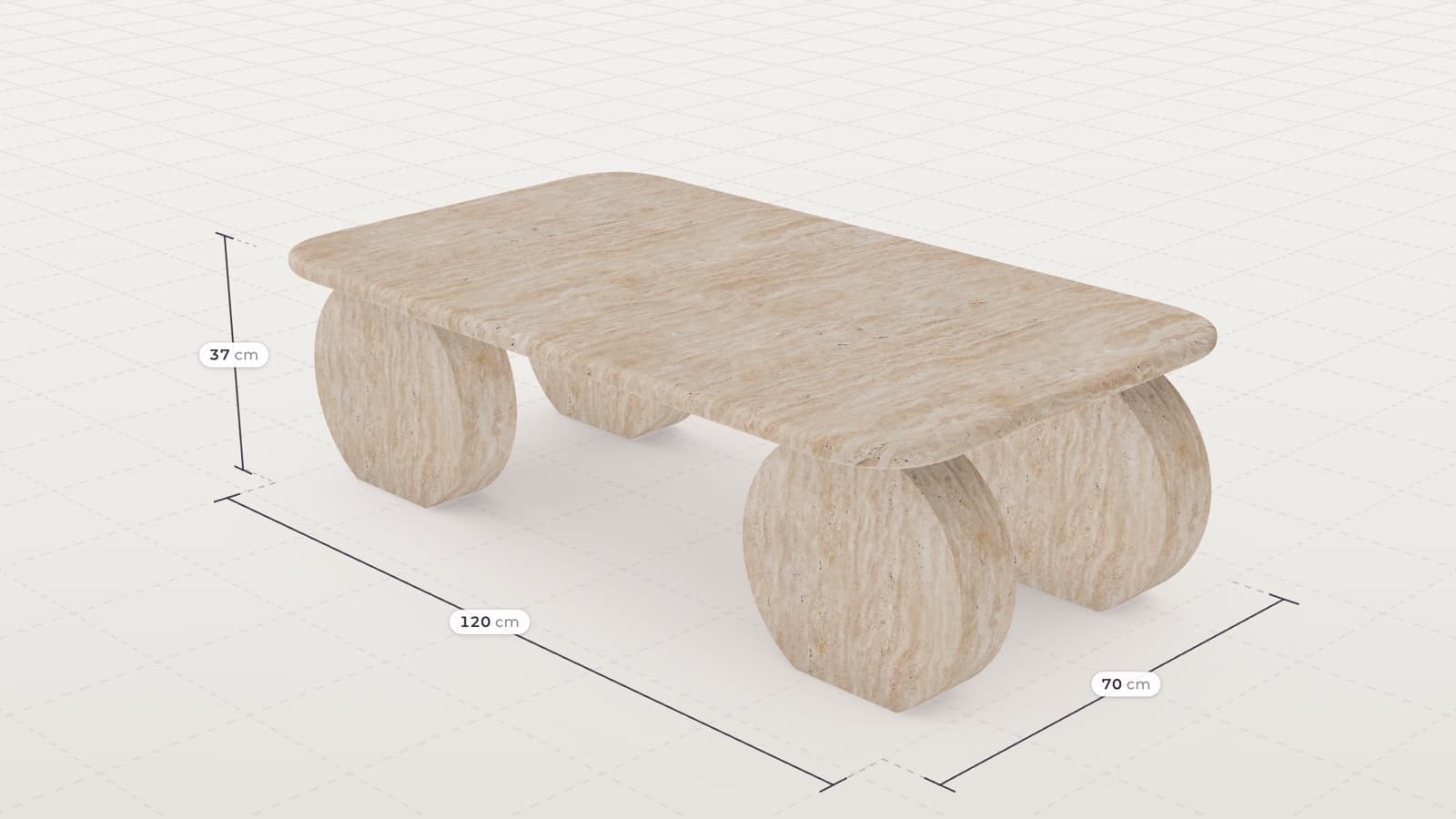
The coffee table on this page comes in 1,536 versions. It has two tops, three stones and four leg shapes, and each of the four legs can be a different shape. It is built from six 3D files and twelve textures, 7.4 megabytes in all.
We built it for Sweef's Leoparden range. It has five parts, which makes it a good one to take apart: the decisions a configurator forces on a shop are all visible in it. If the term is new to you, the glossary has a short definition of a 3D product configurator.

Sweef's Leoparden table. Choose the top, the stone and a shape for each leg, then switch the dimensions on. Every version you can build here is one the files can make.
A table held as parts
The obvious way to show 1,536 tables is 1,536 pictures, or 1,536 3D files. Nobody plans that, but many configurators end up there, with one file per combination, exported from the design tool and downloaded again at every click.
This one holds the table the way a warehouse does. There is a top, and there are legs. Each leg shape is its own file, between 35 and 107 kilobytes of geometry. The top has four sockets, positions measured from its centre, and a leg of any shape drops into any socket. Changing one leg fetches one small file the first time and nothing after that.
The count follows from the parts. Four shapes in four sockets make 256 arrangements. Three stones make that 768, and the glass top doubles it. A fifth leg shape would be one more file, and the table would come in 3,750 versions.
One stone for the whole table
The stone belongs to all the parts at once, and the files are built that way: every top and every leg carries the three stones inside it as material variants, using the glTF extension made for this. One click switches five objects to the same stone, and nothing is downloaded, because the textures are shared.
The extension goes no further. Its specification lists serving configurators as a non-goal and says configuration has "a separate set of concerns". So the files can hold three stones, and whether a travertine top may stand on tiger legs is decided somewhere else. This table is sold in one stone, and the configurator enforces that.

What was in the files we were given
The source material had a separate file for each top. They were unusable: rotated, with bounds that did not match the geometry. The tops that did work came from files where a top and its legs had been exported together as one mesh.
So the legs had to come off. The build splits that mesh into its connected pieces and keeps the ones with a large footprint, which is the slab, and drops the small ones, which are the legs that were baked in. The reinforcement panel under the slab stays as its own layer and is darkened, as the client asked, so it reads as a separate board.
Most projects have a version of this. Most furniture brands have 3D files, and fewer have files that can be taken apart. We open them before we quote, because what is inside changes the price.
Dimensions a shopper can check
Switch the dimensions on and the table reads 120 by 70 centimetres, 37 high. Getting the 120 took a decision.
Measure the whole object, which is what a 3D viewer does by default, and a table on disc legs comes out 125 centimetres wide. The discs are 35 across and stand at the corners, so they reach past the edge of the top. But the table is sold as 120 wide, and that is the number in the catalogue and on the delivery note.
The configurator therefore measures width and depth on the top, and height from the floor. Shoppers do check this with a tape measure.
Where the shop platform bites
The table has six choices: the top, the stone, and four legs. Shopify raised its limit to 2,048 variants per product, and 1,536 fits under that. Its other limit is three options per product, and this table has six.
A product like this cannot be a set of native variants. The configuration has to travel another way, as properties on the order line or as a bundle of parts. The build is prepared for the second: every part has its own article number with the stone as a suffix, so one table becomes five lines, a top and four legs, that a warehouse can pick without reading a description.
Decide this before the 3D work starts. It determines what the configurator hands over at the end, and a configurator that hands over a sentence ("stone top, travertine, legs mixed") has moved the work to whoever reads the order.
What the shop has to bring
For a product of this kind the list is short, and none of it is 3D.
The parts. Files if they exist, drawings and photographs if they do not. One of each part is enough.
The rules. Which combinations are sold. One stone per table is a rule. "The glass top only in the largest size" would be another.
The numbers. A price and an article number per part, and a lead time where parts differ.
With those, a product with colour and material options takes about two weeks from files to a product page. One that is built from parts, like this table, takes longer and is quoted on its own. Collecting the rules usually takes longest, because they tend to live in somebody's head.
The other configurators we have built are on the demo page, each one a real product page you can try. How Sweef uses 3D on its modular sofa is in the case study. If you have a product of your own in mind, send it to us. We answer within a working day with what it takes, and a product with colour and material options we configure free.
Questions
How many 3D files does a product configurator need?
One per part, not one per combination. The table on this page has 1,536 versions and is built from six files and twelve textures, 7.4 megabytes in all. A new leg shape would add one file.
Can a configurator like this run on Shopify?
Yes, but not as native variants. Shopify allows 2,048 variants per product and three options, and this table has six choices. The configuration travels as properties on the order line or as a bundle of parts, each with its own article number.
What does the shop have to supply?
The parts, as files or as drawings and photographs. The rules that say which combinations are sold. A price and an article number for each part, and a lead time where parts differ.
How long does it take to build?
About two weeks for a product with colour and material options. One that is built from parts, like this table, takes longer and is quoted on its own.
What does it cost?
Configurator work is on our Value plan, from 20 dollars per model per month with the 3D model, hosting, updates and implementation included. Ranges that build up from many modules are quoted separately. The plans are on the prices page.
Sources
- Khronos Group, KHR_materials_variants specification, including the non-goal statement on configurators.
- Shopify developer changelog, the product variant limit is now 2048 for all merchants.
- Shopify Help Center, Adding variants, on the three options per product limit.
- The file counts, sizes and measurements are from our own build of the table shown above.