3D for e-commerce6 min read
Questions to ask a 3D and AR vendor before you sign
Nineteen questions to put to a 3D and AR vendor before signing, covering live proof, file sizes, ownership, revisions and what results to expect.
By CharpstAR · 4 Oct 2023 · Updated 29 Sept 2026
Part of 3D models for e-commerce: the complete guide

These are the questions to put to a 3D and AR vendor before signing, and they apply to us as much as to anyone else. Take the list to three vendors and put the answers side by side.
Your own numbers before the call
Before you speak to anyone, work out how many distinct shapes you have and what reference material you hold.
The shape count is a different number from your SKU count. A sofa in twelve fabrics and three sizes is 36 SKUs but usually one to three models plus material variants. Quote the SKU count and every price you get back will be roughly ten times too high.
Reference material means CAD files, photographs of the back and underside, and dimensions you trust. Products with CAD are faster and cheaper to model. Expect a vendor to ask about both before quoting.
Questions about proof
1. Can I open a live model of a product like mine, on my phone, right now?
Ask for a link you can open during the call. A video or a render won't show how the model loads and behaves on a phone. If the vendor has no working example in your category, you'd be their first project in it, and the price should reflect that.
2. Which live retail sites are running your models today?
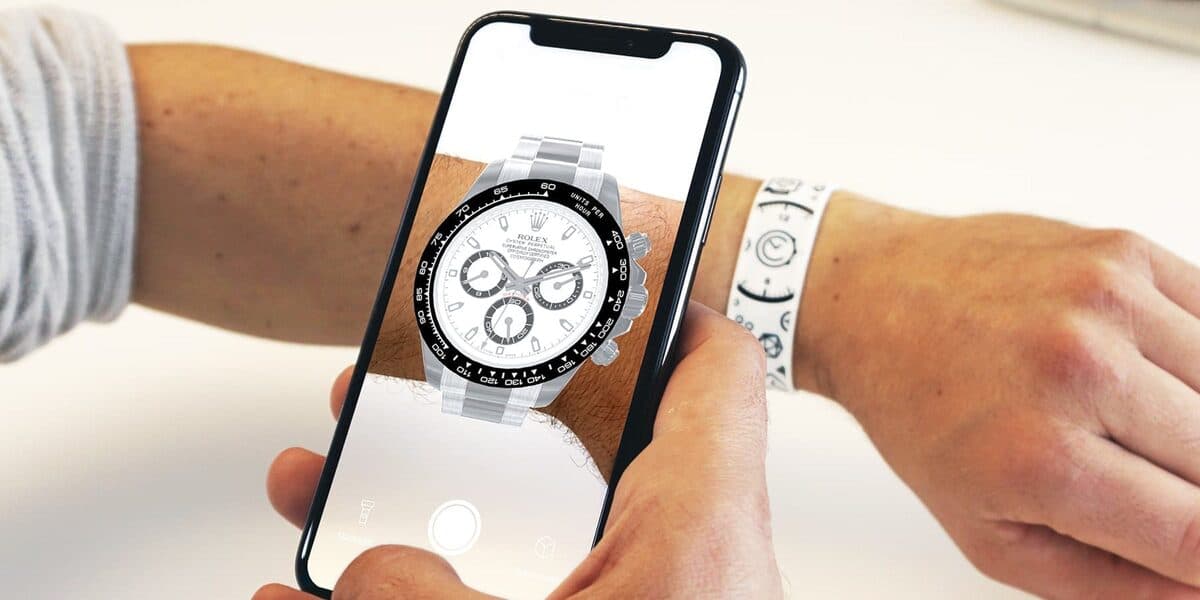
Ask for the address of the shop itself, open a product page on your phone and tap the AR button.
3. Show me a model of a hard product.
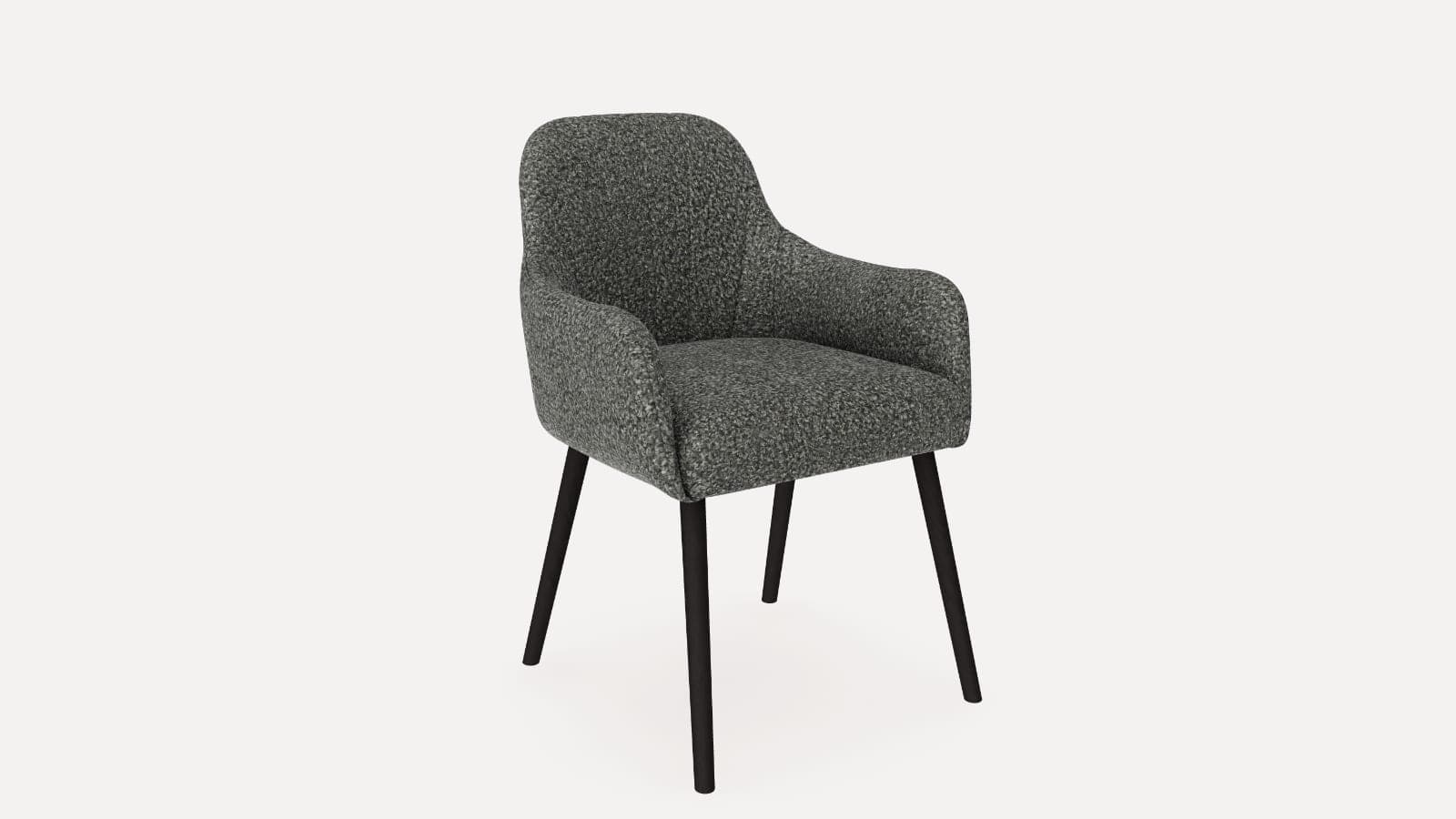
Ask to see upholstery with visible stitching, woven fabric, brushed metal, glass, or a wood grain that runs correctly across a joint. Demo reels tend to show a plain white lamp, which anyone can get right. You learn more from how they handle stitching and brushed metal.
Technical questions
4. What file sizes do you deliver, and in which formats?
The answer should include GLB for web and Android and USDZ for iOS, and it should include numbers. Google's Scene Viewer documentation recommends models under 10 MB and flags anything over 15 MB as an error, with textures at 2048 by 2048 or below, 100,000 triangles as the recommended limit, 30,000 to 50,000 as the ideal range, and around ten materials. Shopify's 3D commerce guide says an ideal GLB file is around 4 MB.
If these limits are news to the vendor, their experience is probably in marketing renders, which can look very good and still be too heavy for a product page.
5. Who does the format conversion, and who does it again when the formats change?
GLB and USDZ both change over time, and someone has to re-export the files when they do. If that job falls to you, add its cost to the quote.
6. Where are the models hosted and what is the delivery latency in my markets?
Shoppers leave before a slow model has loaded, so ask where the files are served from for each country you sell in.
7. How do you handle variants?
Colours and fabrics should be material swaps on one shared shape. If the quote charges the full model price for each colourway, it will come to several times more for the same result, so compare that line.
8. What accuracy do you guarantee on dimensions, and what do you do if my product data is wrong?
AR shows the product at real size, so an error in your dimensions becomes visible in the customer's room. The vendor should tell you when the numbers in your data disagree with each other and ask which one is right.
Commercial questions
9. Do I own the models? What happens to my files if I leave?
Get this in the contract. Subscription with hosting and a one-off purchase with ownership are both normal ways to buy, and you need to know which one you have. Ours is subscription: Basic from $10 per product per month on 12 months with a minimum of 100 variants, Value from $20 per model per month on 24 months, Enterprise quoted.
10. How many revision rounds are included, and what counts as a revision?
"The oak is too orange" is a revision. Requests for a different product arrive as feedback in the same way, so get the definition written down before work starts.
11. What is the price for a product I add in month seven?
Your catalogue will grow. Make sure the price you agreed for the first batch also applies to products you add later.
12. What is the minimum commitment and the exit?
A 24-month term, which is what our Value plan runs on, is a long commitment, and you should know what you get for it and how it ends.
13. What do you need from me, as a list?
The vendor should be able to list the reference material, approvals and access they need from you straight away. Most projects run late on the client's side of the work, so ask for the list before the schedule is agreed.
Questions about limits and results
14. What can your models not do?
Fabric drape on garments is approximate, very complex mechanisms are expensive, glass and liquid are hard, and very large scenes run into file size ceilings. Any vendor who has done the work will name limits like these.
15. How much of this is automated, and what does the automation get wrong?
Photogrammetry and AI-assisted modelling are useful and fail in known ways: soft edges, lighting baked into the textures, wrong scale, messy topology. Ask which parts of your job would be automated, and ask to see an output nobody has cleaned up.
16. Who does the modelling, and where?
This is a question about capacity. If the work goes to a partner studio, ask what happens when that studio is busy.
17. Can you show me a project that went badly and what you changed?
A company that has delivered many projects has had some go wrong. The answer shows whether they learned from it.
18. What conversion improvement should I expect?
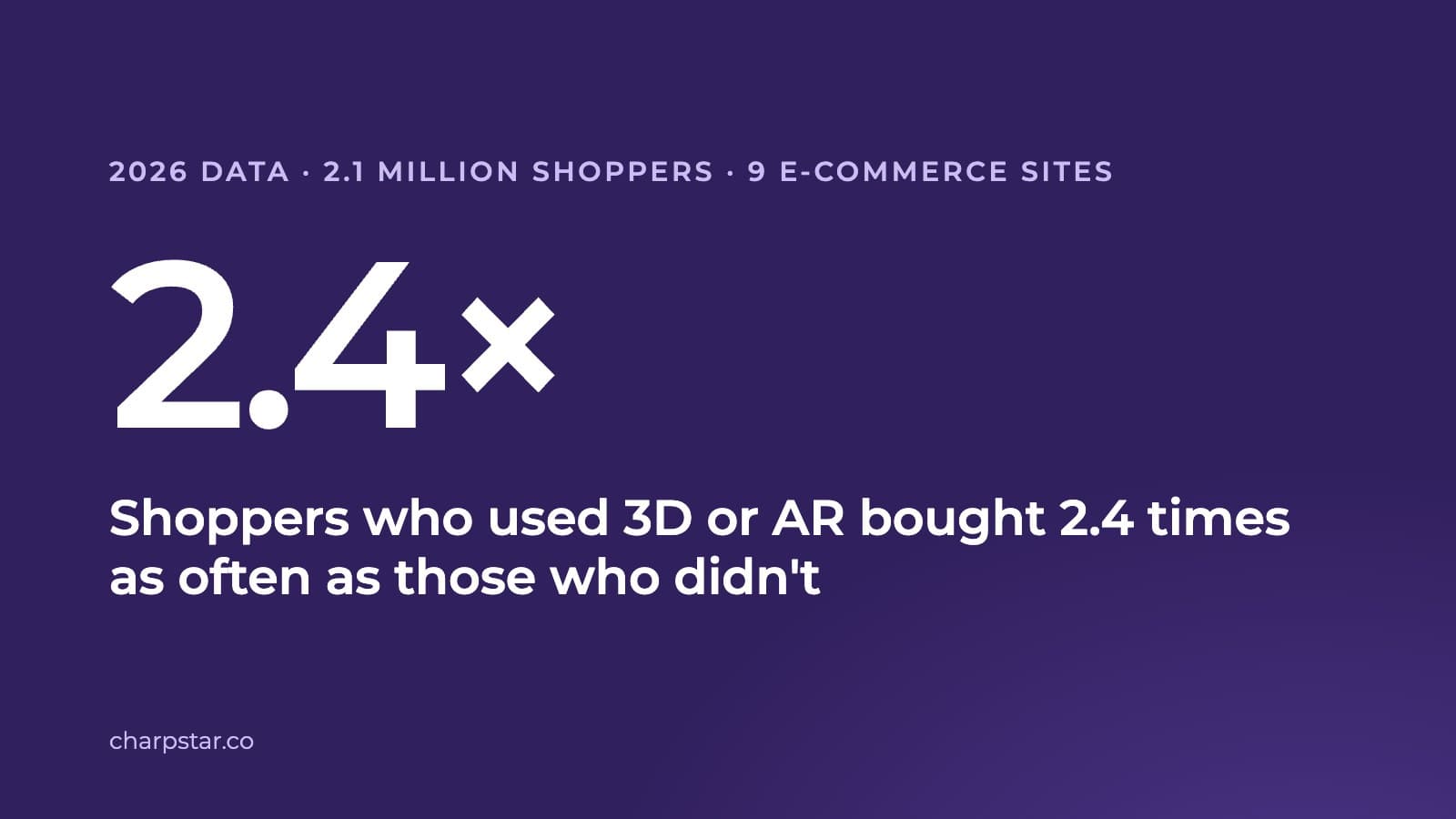
Nobody can know this for your catalogue in advance, and a vendor should say so. Shopify reported in 2020 that interactions with products carrying 3D or AR content converted 94 percent more often than the same kind of products without, and its Rebecca Minkoff results showed shoppers 44 percent more likely to add to cart after a 3D interaction and a 65 percent purchase lift on AR-enabled pages. Those merchants chose their best products to model, so treat the figures as a reason to run a pilot and expect your own result to be lower.
19. Will this reduce my returns, and by how much?
AR reduces the share of returns caused by an item not fitting the space and does nothing for colour disappointment, quality complaints or late delivery, so a percentage quoted against your total return rate has skipped that step. Ask which return reasons the vendor expects to move.
Comparing the answers
When you compare the answers, look at whether each vendor produced a live model in your category, knew the file size limits without looking them up, and named a limitation without being pushed. If one vendor did all three, run the pilot with them even at a higher price.
Then run a pilot on ten to twenty products before signing anything long term. Put the viewer live on real product pages and track rotations, AR opens and conversion for the sessions that used it.
If you want a model to compare the vendors against, we'll build one of your products free and you can use it in the comparison whichever vendor you choose; send us one product. What we build and charge is on solutions and prices.
Sources
- Google, Scene Viewer documentation.
- Shopify, 3D e-commerce.
- Shopify, merchant data on 3D and AR content, September 2020.
- Shopify, AR shopping.