Fashion8 min read
Augmented Reality Clothing Fitting for Accessory Shops
Virtual try-on for eyewear, 3D and AR for bags, shoes and jewellery: how a fashion accessories shop cuts size returns and sells more online.
By CharpstAR · 4 Oct 2023 · Updated 14 Oct 2026
Imagine shopping online for sunglasses.
You like a round frame in tortoiseshell, but the model in the photo has a narrower face than yours, and the frame width in the description means nothing to you. You order two pairs to compare at home and plan to send one back. The shop pays for both shipments and then handles the return.
For an accessories shop, that second pair is a cost on every order. The National Retail Federation put United States returns at 743 billion dollars in 2023, 14.5 percent of all sales and 17.6 percent of online sales.
Augmented reality (AR) is often sold as the answer to clothing fitting. Its limits show with garments. For glasses, jewellery, bags and shoes, it answers the fit and size question before the order. With CharpstAR, customers try frames on their own face through the camera, turn a ring or a bag in 3D, read its measurements on the model and place it at real size on their own table.
What Is AR Fitting for Fashion Accessories?
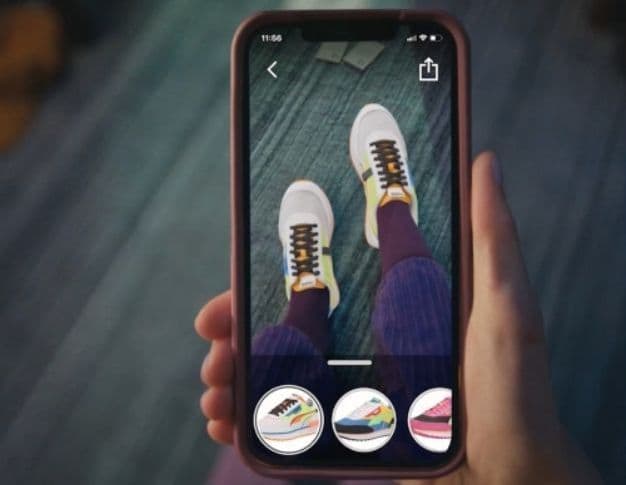
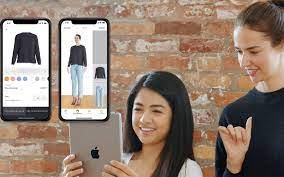
AR fitting puts a correctly scaled 3D model of a product into the view of the phone or laptop camera. For eyewear, the camera follows the customer's face and the frames sit on it at their real width. For bags, shoes and watches, the phone finds the floor or the table and places the product there at its real size.
For an accessories shop, we build:
- Virtual try-on for glasses and sunglasses, in the browser with no app
- 3D models of bags, shoes, watches and jewellery for the product page, with AR placement
- Measurements shown on the model, so width, height and depth sit next to the product
- Colour and material configurators, so every frame colour, metal or leather comes from one model
- Rendered product images from the same models
What AR Does Not Do for Garments
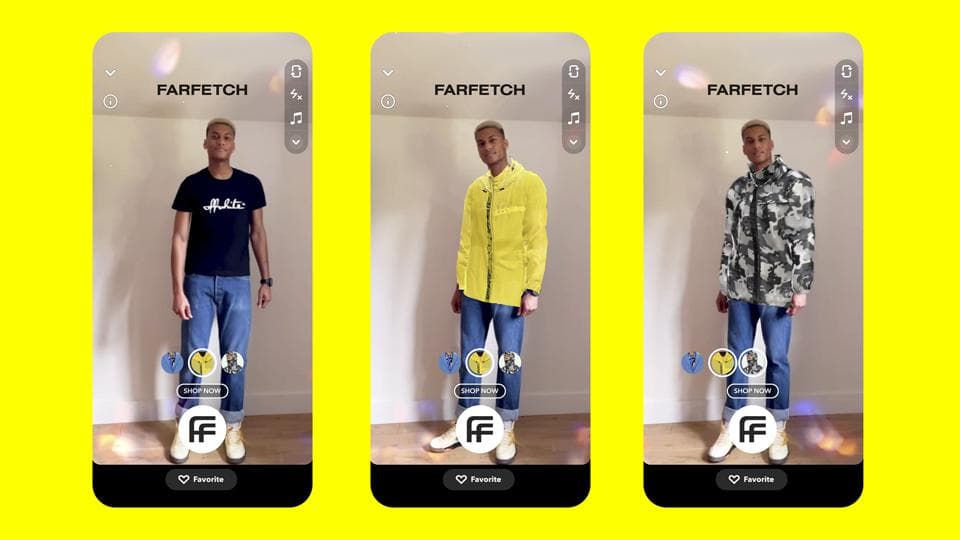
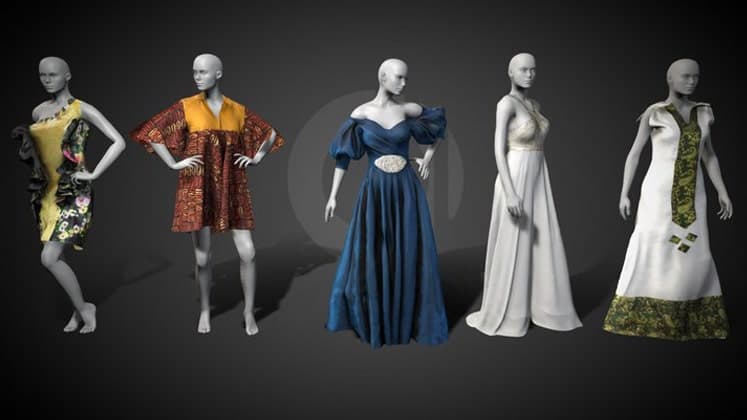
Fabric drapes, stretches and folds, and how a jacket fits depends on shoulder width, arm length and posture, which a phone camera does not measure to the centimetre. Garment try-on shows a colour and a cut on an approximate body, and it cannot tell a customer which size to order. CharpstAR does not sell garment fitting or body scanning. In-store smart mirrors have the same limit, since the overlay knows no measurements either, and our post on retail smart mirrors covers what they cost. For clothing, a 3D model still shows the cut and the colours from every side, as on these trunks.
Clothing
Trunks
Four colours on one cut.

Trunks in four colours as a 3D product model: the shopper turns them and sees the cut and the colour. They do not show how the trunks fit a body.
Why Use AR Fitting in an Accessories Shop?
Fewer Returns for the Wrong Size
A customer who has seen the frames on their own face knows whether they are too wide. A bag placed on the kitchen table at real size shows whether the laptop goes in. Fewer orders come back because the product was bigger or smaller than expected.
Fewer Orders of Two to Compare
When the customer can compare frame shapes on their face before buying, there is less reason to order two pairs and return one. That saves you a shipment, a return and a check of the returned stock.
Higher Conversion on Products Bought on Looks
Accessories are bought on how they look on the customer. Shopify reported in 2020 that interactions with products carrying 3D or AR content converted 94 percent more often than the same kind of products without, and at Rebecca Minkoff, shoppers who viewed a product in AR were 65 percent more likely to buy it.
One Model for Every Colour and Metal
A frame in four colours, a ring in four metals or a bag in six leathers needs one 3D model, with each option as a material. New colours go live without a photo shoot, and the same model gives you rendered product images.
Use Case: Our Accessory and Fashion Demos
Our live demos show what your customers would get on your product pages.
Sunglasses With Try-On
In the sunglasses configurator, the customer:
- Chooses one of four shapes
- Picks one of four frame colours and one of four lenses
- Turns the pair in 3D to check the hinges and the lens tint
- Presses try-on, allows the camera and sees the pair on their own face
- Goes back to the product page and adds the pair to the cart
A Ring in Metals and Gemstones
The ring configurator offers four metals and ten gemstones, with light passing through the stone as it does in a real one. Customers can compare every combination without you photographing forty rings.
A Blazer in Three Cloths
The blazer demo shows a jacket in three cloths, with its details marked on the model. Customers can look at the cloth up close from any angle, though the model does not tell them which size to order.
In every demo, the order goes through your normal cart and checkout.
What Reduces Size Returns in a Fashion Shop
AR works best next to the basics on your product pages:
| Measure | What it does | Effort |
|---|---|---|
| Size chart on the product page, in the shopper's units | Helps the shopper choose between two sizes. | Low |
| Fit notes from returns data | "Runs small, take one size up" on the page, based on what came back. | Low |
| AR for rigid accessories | Glasses on the shopper's face, watches and bags at true scale on the table. Fit question answered before checkout. | Medium |
| Garment try-on | Helps with style, does little for size returns. | High |
Size charts and fit notes cost very little and belong on every garment page. For accessories with a fixed shape, AR is the measure that answers size before the order.
Our Clients' Experience
Our published case studies are from furniture, where fit is also a question of size. Sweef uses a modular sofa configurator with AR, so customers see their sofa in their own room. Contura's customers configure a wood-burning stove online and view it in AR, and customers often arrive at a retailer with a clearer idea of which stove they want. A pair of glasses or a handbag works the same way: the customer settles the size before ordering.
How to Add Try-On and AR to Your Shop
Step 1: Pick the Products With the Most Returns
Start with eyewear if you sell it, then bags, shoes and jewellery. Your returns data shows which ones come back for size.
Step 2: Get a Free Sample
Send a link to one product page. We build the first 3D model as a free sample, so you can try it on your own phone before you decide.
Step 3: We Model the Range
We build each product with all its colours and materials, check the measurements against your product data, and set up try-on for your frames.
Step 4: Go Live on Your Product Pages
The viewer, the AR button and try-on go onto your existing product pages with one snippet on Shopify, Shopware, Magento, WooCommerce or a custom site.
How to Measure the Effect on Returns
Pick ten products, measure for a month before and a month after, and compare:
| KPI | What to measure |
|---|---|
| Return rate for size or fit | Whether fewer glasses, bags and shoes come back because they were too big or too small |
| Multiple-size orders | Whether fewer customers order two versions to compare |
| Try-on use | How many customers open try-on or AR, and how many of them buy |
| Conversion rate | Whether the products with AR sell to more visitors |
| Size questions | Whether customer service gets fewer questions about measurements |
What Does AR Fitting for Accessories Cost?
Virtual try-on comes with the Value plan, from 20 dollars per model per month for at least 100 models over 24 months. For that you get the 3D models, AR, hosting, updates, custom dimensions, annotations, rendered product images and colour and texture configurators, so the ring and the blazer above fit in the same plan. If you only need 3D and AR without try-on, the Basic plan starts at 10 dollars per product per month for at least 100 variants over 12 months. Neither plan has a setup fee, and the first product is free.
Which Fashion Shops Is This For?
AR fitting suits a shop that sells:
- Eyewear, sunglasses or optical frames
- Rings, watches and other jewellery in several metals or stones
- Bags, where capacity and size decide the purchase
- Shoes, where detail and size matter
- Accessories in many colours that are costly to photograph
If most of your range is garments and your returns are about sizing, a size chart and fit notes will do more than AR.
Let Your Customers Try Your Frames Before They Order
Pick the accessory with the most size returns and send it to us as a free sample. You keep the 3D model and can measure the effect on your own returns. For eyewear try-on across a whole range, book a demo and we will show you how it would run on your product pages.
Questions
Can AR tell a customer which clothing size to buy?
No. A phone camera does not measure the body precisely enough, so a size chart and fit notes do more for garment returns.
Does try-on need an app?
No. The customer allows the camera in the browser and sees the frames on their face.
Which products work best?
Products with a fixed shape, such as glasses, sunglasses, rings, watches, bags and shoes.
Sources
- National Retail Federation and Appriss Retail, 2023 Consumer Returns in the Retail Industry.
- Shopify, merchant data on 3D and AR content, September 2020, AR shopping: Rebecca Minkoff and Gunner Kennels results, and 3D ecommerce guide.