Other4 min read
Smart mirrors in retail: what they do, cost and privacy
What a smart mirror in a shop does, what hardware, tagging and software cost, the privacy rules for a fitting-room camera, and where a phone does the job.
By CharpstAR · 4 Oct 2023 · Updated 9 Oct 2026
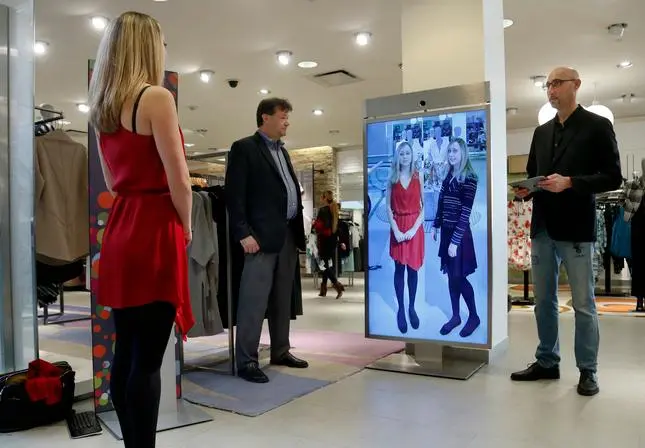
A smart mirror is a large touchscreen with a camera behind a mirrored surface, mounted in a fitting room or on the shop floor. Depending on the model, it recognises the garments a shopper has brought in, shows stock and sizes, calls a staff member when someone needs another size, overlays products on the reflection and in some cases takes payment.
Whether one pays off in a given store depends on which of those functions the store needs, because vendors sell them as a bundle and they don't cost or deliver the same.
What a smart mirror does
Product recognition comes from RFID tags in the garments, which tell the mirror what the shopper has carried in. Shopify's retail guide says in-store smart mirrors use RFID tags to recognise physical products, while online virtual fitting rooms rely on cameras and software.
Once the mirror knows which garment the shopper is holding, it can show other sizes and colours, fabric details and whether the right size is in the stockroom.
Service calls work from the same screen. A shopper asks for a different size without getting dressed and walking out, and a staff member gets a notification.
The virtual overlay tries items on digitally against the reflection. EuroShop's write-up describes mirrors with touchscreens, cameras and RFID that allow virtual try-on without changing clothes, and mentions units such as a 32-inch frameless touch display that also works as a virtual shelf, advisor and payment station. This is the function vendor demos lead with, and it has the same difficulty as garment try-on on a phone, because fabric on a moving body is hard to render well.
What it costs
Vendors quote each deployment separately, so there is no public price list. The cost is made up of these items.
| Cost line | Notes |
|---|---|
| Hardware | The mirror unit itself. EuroShop's overview names cost as one of the main drawbacks and says buying and installing mirrors is still relatively expensive |
| Installation | Power, network and mounting in every fitting room, usually done outside trading hours |
| RFID tagging | Tagging the range and keeping new stock tagged is ongoing work for the stores |
| Software licence | Software-only virtual fitting room tools on Shopify's list cost about 129 to 549 dollars a month, which gives a lower bound for the software part |
| Content | 3D assets, product data and images have to exist and be kept up to date |
| Maintenance | EuroShop notes that touchscreens need regular maintenance, and a broken unit sits in the fitting room until someone fixes it |
EuroShop cites a global smart mirror market of roughly 1.8 billion dollars in 2024, projected to reach about 6 billion by 2034, which works out at around 13 percent growth a year.
The privacy rules a fitting-room camera falls under
EuroShop lists data protection as a core challenge for smart mirrors. In Europe a camera in a fitting room means GDPR consent, signage and retention rules, and if the system recognises faces it handles biometric data, which comes with stricter requirements again. Vendors usually answer with on-device processing and no stored footage. The retailer still needs its own legal sign-off and clear signs in the room, and some shoppers will object to the camera whatever the signs say.
Where a mirror does something a phone can't
The shopper already owns a phone, has it in hand, it costs the store nothing in hardware and it works at home. A mirror is worth considering in a few situations.
In the fitting room itself the shopper is half-dressed and the phone is in a bag, so calling for another size or checking stock from the mirror is the strongest case for one. That function doesn't need AR.
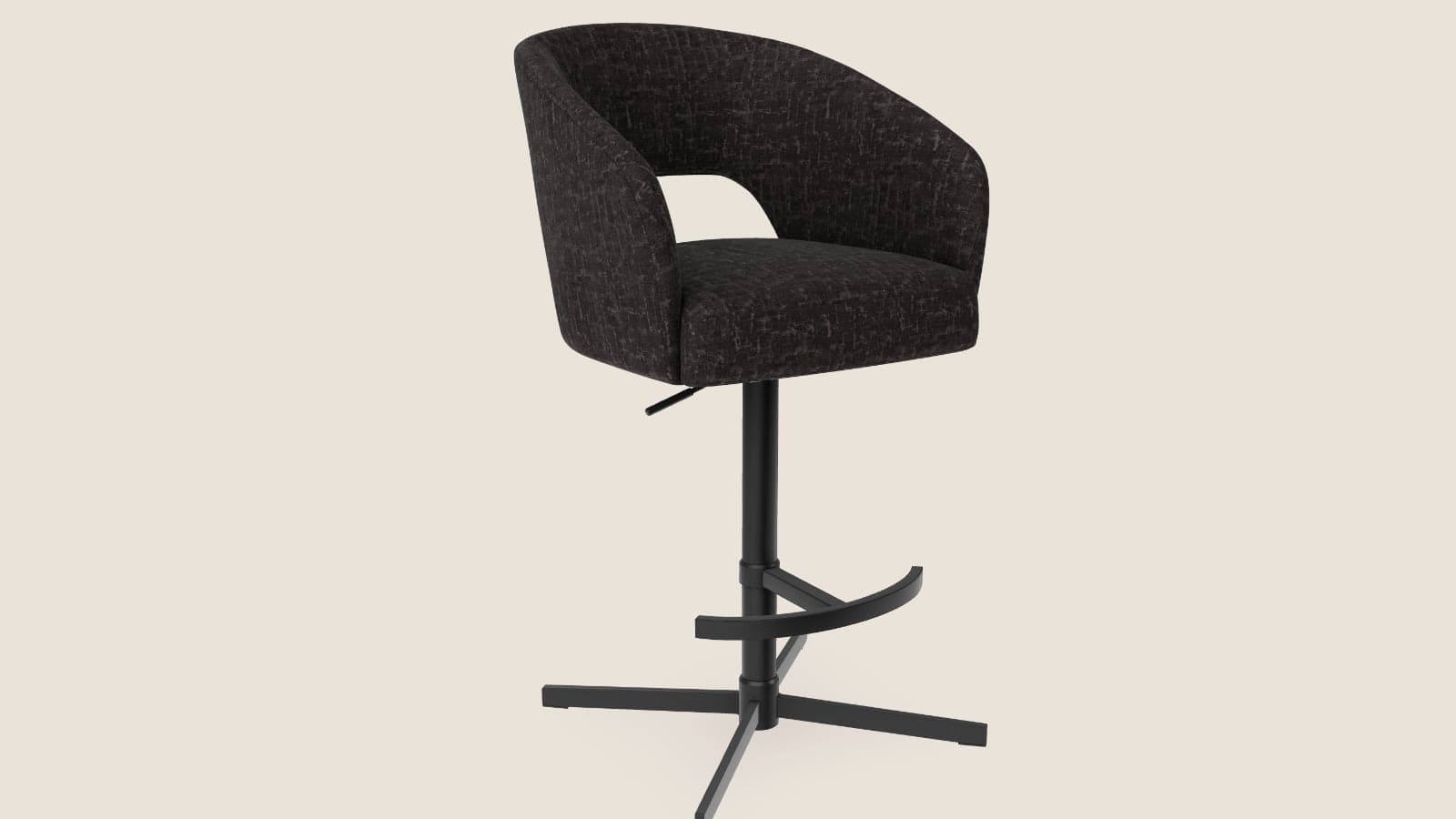
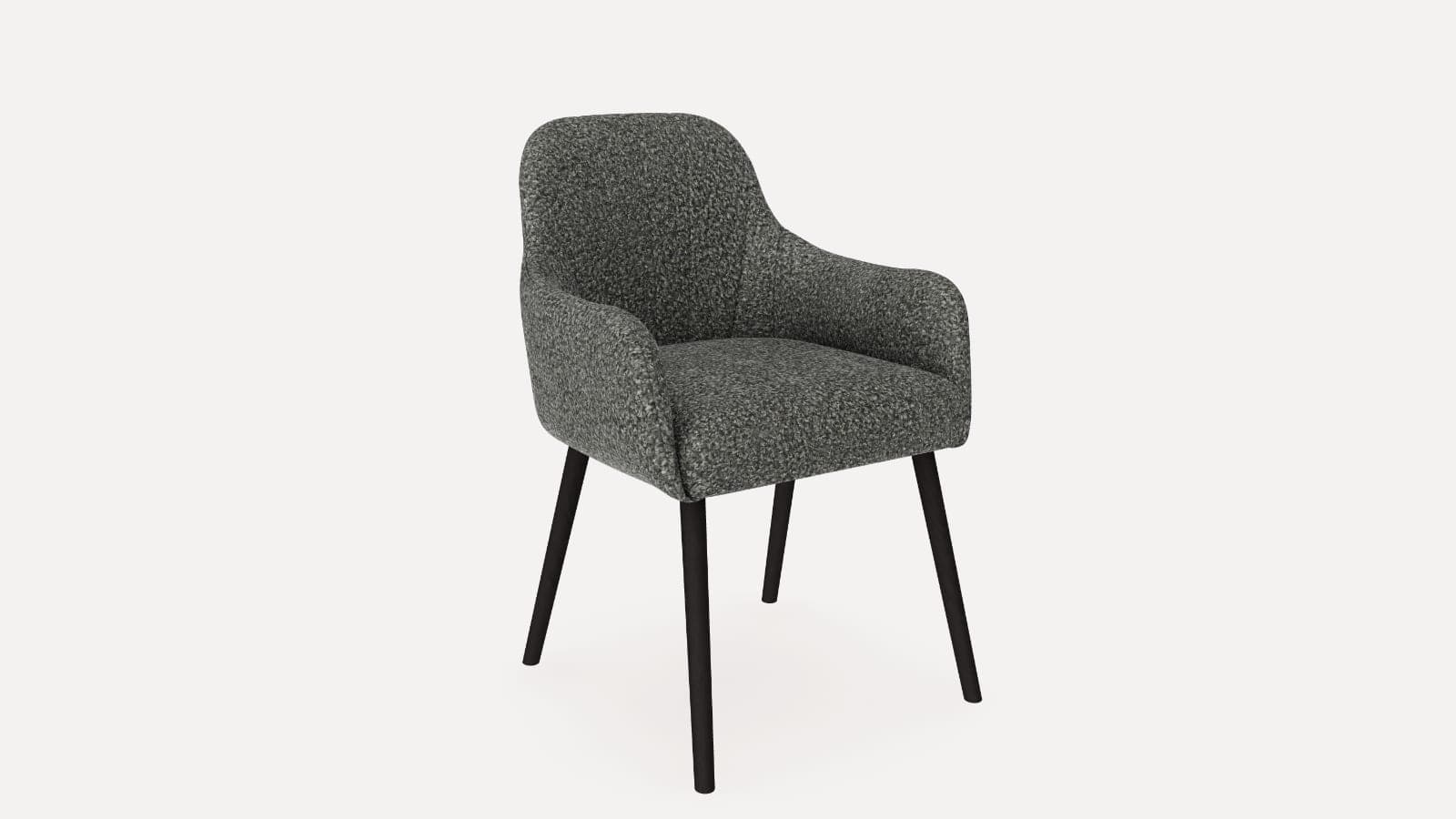
Large products that can't be carried to the shopper are another case. For furniture, appliances, kitchens and stoves, a big in-store screen that shows the whole range in 3D stands in for floor space the store doesn't have.
Showrooms are similar, since the range is too broad to stock and staff help customers specify an order instead of selling from the shelf.
Some flagship stores install one and put it down to marketing.
At home, the question is whether the product fits the room, and that is answered on the shopper's phone with AR.
The 3D content behind any screen
Whichever screen you pick, you need accurate 3D models of your products with real dimensions and correct materials, and those models are the expensive part. One file can feed a mirror, a website viewer, a phone AR button and your rendered product images. What a model has to get right on size, colour and material is in our post on 3D model accuracy.
How to decide
Start with one store, the fitting rooms in one department and three months, and agree the numbers to watch before the mirrors go in. Conversion in that department compared with a similar store is one; how often staff get called for a size is the other. If most of what the mirror does is take size requests, a call button and a tablet would have done it.