Fashion8 min read
Why fashion brands adopt augmented reality, and what it costs them
Why fashion and accessory brands add augmented reality to their shops, the cases behind it, which products suit it and what a first project costs.
By CharpstAR · 21 Mar 2023 · Updated 19 Oct 2026
Let shoppers try your glasses on their own face and turn your bags and shoes in 3D, on the product pages you already have.
Imagine a customer on your product page for a pair of sunglasses. The frame is shown on a model whose face is nothing like hers, and the lens width in the size table means little to her. She wants to know whether the shape suits her and whether the frame is too wide for her face, and the page cannot tell her. She adds the pair to her wishlist and moves on.
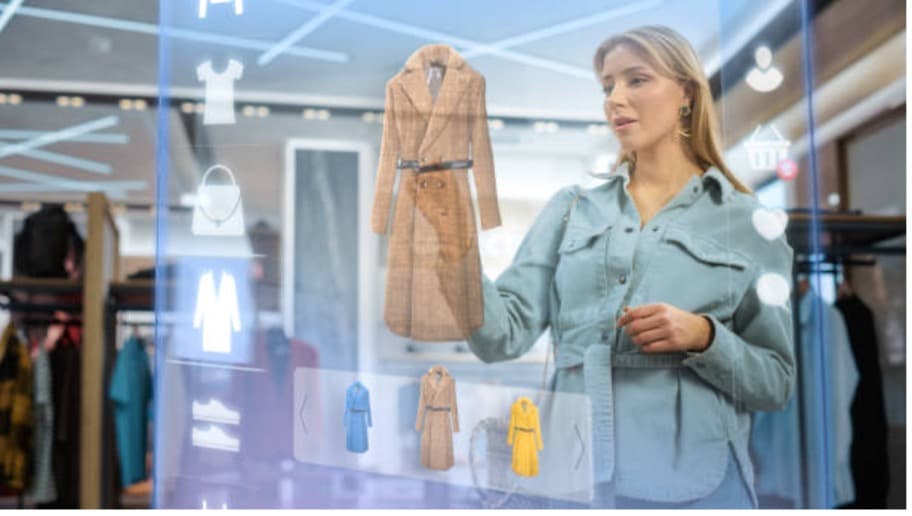
Augmented reality (AR) answers that question on the page. The customer taps a button, sees the frame on her own face through the phone camera and decides. For bags, shoes and watches, a 3D viewer with AR lets her turn the product and see it at its true size.
What Is Augmented Reality in Fashion E-commerce?
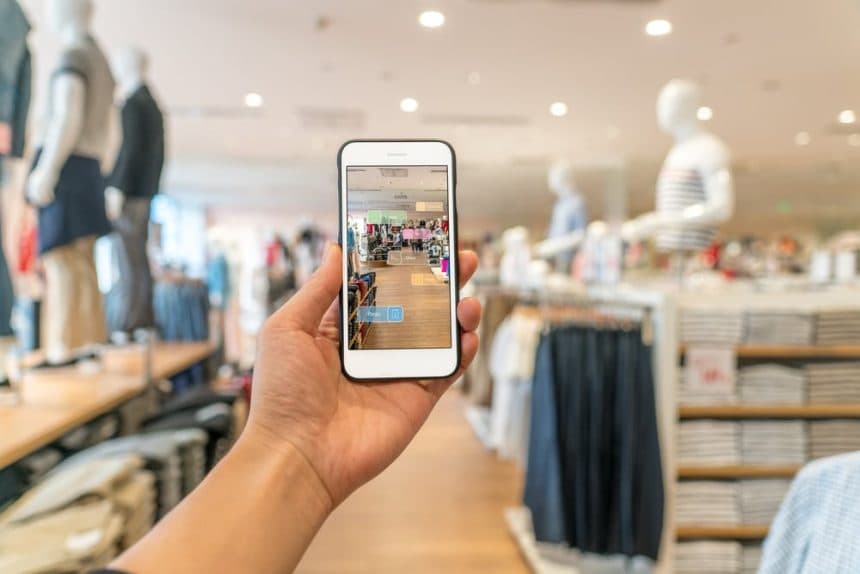
Augmented reality in fashion e-commerce places a product on the shopper or in the shopper's surroundings through the phone camera, from the product page, with no app to install.
Depending on the product, your customers can:
- See a frame on their own face and turn their head to check the fit at the temples
- Turn a bag, a shoe or a watch and zoom in on the leather, the hardware and the stitching
- Switch between colourways and materials on one model
- Place a bag or a pair of shoes at its true size next to something they own
CharpstAR builds the eyewear virtual try-on and the 3D product viewers with AR for shoes, bags and accessories. We do not build garment try-on, and the sections below say where garments fit.
Why Use Augmented Reality for Fashion E-commerce?
Increase Conversion Through Purchase Confidence
The Deloitte Digital and Snap consumer AR study, with 15,000 respondents, found that 56 percent of consumers said AR gave them more confidence about product quality, and that a brand with an AR experience of its own was 41 percent more likely to be considered. On the retailer side, Shopify reported a 94 percent conversion lift for interactions with 3D or AR content in its merchants' shops. Both are averages from other shops and surveys, so read them as a direction and let your own pages give the number.
Reduce Returns on Rigid Products
In 2023, retail returns in the United States reached 743 billion dollars according to the National Retail Federation, and 17.6 percent of online orders went back. AR reduces the returns it can see, such as a frame that is too wide for the face or a bag that is smaller than the photos suggested. For garments, where drape and stretch decide the fit, it raises confidence but cannot measure the body. We cover the line between the two in where AR does and does not fix fit.
Keep the Try-On on Your Own Product Page
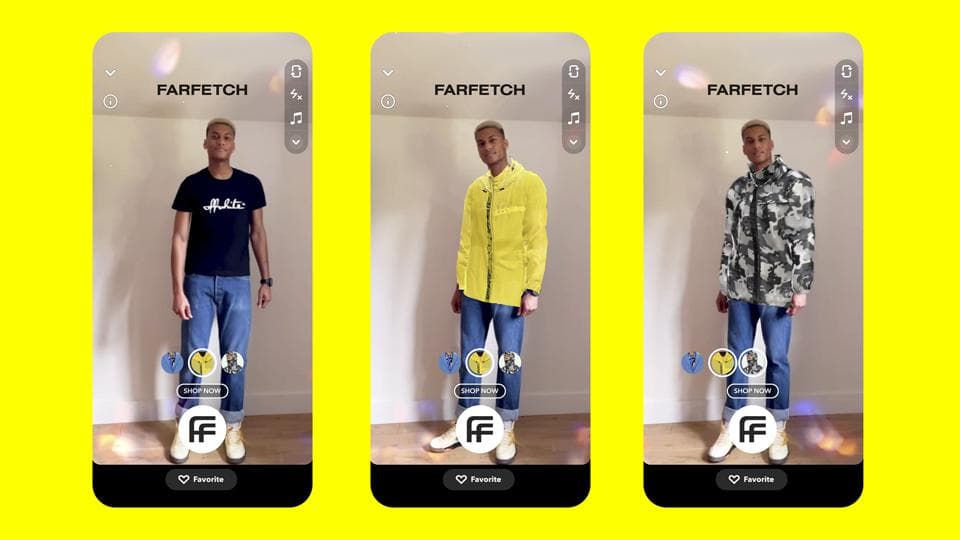
Gucci's 2020 shoe try-on on Snapchat, the platform's first global shoppable AR campaign, showed that shoppers will point the camera at their own feet, see four sneaker styles on them and tap through to buy. That campaign lived in Snapchat's app and ran on Snapchat's media prices. The try-on CharpstAR builds runs on your own product page, in the browser, so the shopper who tries a frame is already where the purchase happens and there is no platform between you and her. Shoppers still show a try-on to friends, and what a share does for a product page is the subject of our post on AR and social sharing.
Reduce Photography Costs for Colourways
A bag in six colours and two sizes needs twelve photo sets, and a new colour means a new shoot. One 3D model carries every colourway, and the same model serves the product page, the AR view and your campaign images.
Use Case: Sunglasses With Virtual Try-On
Eyewear is the strongest case we see for AR in fashion. A frame is rigid and a phone tracks a face reliably, so the try-on answers the question about shape and width.
How the Try-On Works
The customer opens the product page and taps the try-on button. Then she:
- Sees the frame on her face through the front camera, at the right size
- Turns her head to check the temples and the fit at the bridge
- Switches frame colours and lens tints on the same model
- Turns the frame in the 3D viewer to see the hinges and the lens edge
- Adds the pair to the cart from the same page
Try the sunglasses demo we built: four shapes, with frame and lens colours and a try-on.
What Goes Onto Your Product Pages
Each frame comes back as a 3D model with the try-on attached, hosted by us, and one snippet for the product page. The order goes through your own checkout with the chosen frame and lens colour. For bags, shoes and watches, the model opens in the phone's AR view, through AR Quick Look on iPhone, from the browser.
How to Add Augmented Reality to Your Fashion Website
The try-on and the viewer go onto the product pages you have, and your checkout takes the orders as before.
Step 1: Choose One Rigid Category
Start with eyewear, bags, shoes or watches, where the fit question is visual, and take one category at a time, so shoppers who browse it meet the same experience on every page in it. The plan sizes are in the cost section below.
Step 2: Send Us the Product Links and Material References
A link to each product page is enough to start, and close photos of the leather, the metal and the acetate help. We reply within one working day with what we need and what it costs.
Step 3: We Build the Models and the Try-On
We build each product in 3D with the material detail and, for eyewear, the virtual try-on. You approve each model before it goes live.
Step 4: Go Live and Measure
The viewer and the try-on go on the product page as one snippet. Put the button near the main image and mark the products that have it with a "try on" badge on the category page.
How to Measure the Results
| KPI | What to measure |
|---|---|
| Try-on open rate | The share of visitors who opened the try-on or the AR view |
| Viewer engagement | The share of visitors who turned the 3D model |
| Conversion rate | Whether the product pages with AR convert better than before, or than a control group |
| Add-to-cart rate | Whether a try-on leads to more add-to-cart clicks |
| Return rate | Whether fewer orders come back because the fit or the look was wrong |
| Support questions | Whether customers ask less often about size, colour and material |
Try-on use and viewer use are readable within a month. Conversion and returns need enough orders and the full return window, so compare the pages with the same pages before the change and keep the comparison running past the first month.
How Much Does Augmented Reality Cost for a Fashion Shop?
AR projects are paid for in one of two ways:
| Goal | What you build | Where it lives | How it is paid |
|---|---|---|---|
| Reach | A sponsored lens or filter | Snapchat, Instagram, TikTok | Platform media spend plus lens production |
| Confidence and returns | A 3D viewer, try-on and web AR on your product pages | Your own site, no app | A monthly fee per product |
The second row is where most fashion brands outside the luxury tier start, because it lives on the product page, where the purchase happens, and does not depend on a platform's audience or prices.
Virtual try-on is part of the Value plan, which costs from 20 dollars a model each month, runs for 24 months and covers a catalogue of at least 100 models, so a first project is a category rather than a handful of frames. Bags and shoes without try-on fit the Basic plan, from 10 dollars a product each month, for a catalogue of 100 variants or more on a 12-month term. Enterprise is quoted and has a flexible product volume. In every plan the models, the hosting, the updates and the implementation are included and there is no setup fee; the full comparison is on the prices page.
Is Augmented Reality Right for Your Fashion Business?
AR is a strong fit if you sell:
- Eyewear and sunglasses, where the try-on answers the shape and width question
- Bags, where shoppers want to see the leather and the size against something familiar
- Shoes, watches and jewellery, where the product is rigid and the detail sells it
- Hats and other accessories that shoppers want to see at true size
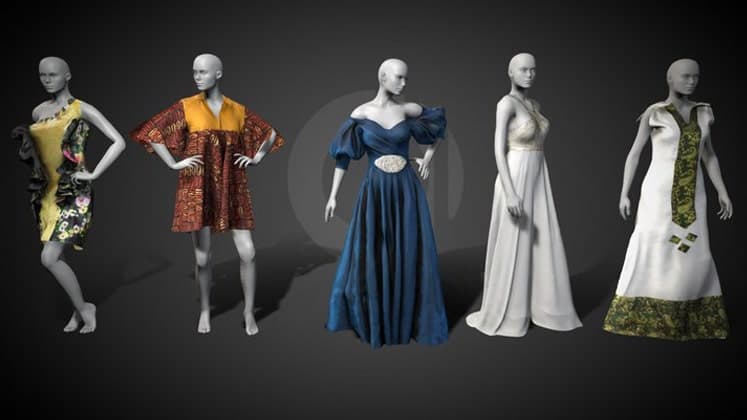
For garments, a 3D viewer that shows the lining and the construction up close does work a flat photo cannot, but AR will not tell a shopper whether a coat fits, and we do not promise that a garment try-on will cut returns. If the budget covers one category, put it on accessories.
See One of Your Products in 3D and AR
CharpstAR builds the models, the eyewear try-on and the viewer, places them on your product pages and hosts them. The first frame costs nothing: send us a link to its product page and you get the model, the try-on and the snippet back within ten working days, to keep whatever you decide. Send us a frame, or another product for a 3D viewer with AR.
Sources
- WWD, Gucci reveals Snapchat AR shoe try-ons, July 2020.
- Deloitte Digital and Snap Inc., consumer AR report press release, May 2021.
- Shopify, merchant data on 3D and AR content, September 2020 and AR shopping results.
- National Retail Federation and Appriss Retail, 2023 Consumer Returns in the Retail Industry.
- Apple Developer, AR Quick Look.