Furniture and home5 min read
How to sell furniture internationally online
Units, bed sizes, stairwells, hreflang and spec tables break before the translation does when a furniture shop goes abroad. One 3D model serves every market.
By CharpstAR · 4 Oct 2023 · Updated 9 Oct 2026

Opening a second country looks like a translation project until you start. The translation turns out to be the easy part. What takes the time is measurement units, size names, doorways, and the fact that the photography was shot for one market's idea of a living room.
We work with Nordic furniture and home brands that sell into several countries, and this is written from the problems they ran into. The 3D part is at the end, because it only makes sense once the other costs are clear.
Units and the decimal point
Centimetres in most of Europe, inches in the United States, and both in the United Kingdom depending on the product. A unit toggle is the obvious fix. It does not cover rounding, weight or decimal separators.
- Rounding. A 212 cm sofa is 83.46 inches. Publish 83 inches and you have lost half a centimetre, which matters to someone fitting it into an alcove. Publish one decimal place and state the original unit.
- Weight. Kilograms and pounds, plus the volumetric weight your carrier bills on, which may match neither.
- Decimal separators. 1.205 mm in one locale is 1205 mm in another. Spec tables break on this quietly, and the first you hear of it is a complaint.
Size names
A "two-seater" is a different width in Sweden and in Italy. Beds are the worst case. A double, a queen and a king are different objects in different markets, and mattress sizes do not map across. If you sell beds abroad, print the centimetres next to the local name every time.
Housing differs too. Older European apartment buildings have tighter stair turns than the suburban houses most product photography is styled for. If a product has a diagonal dimension that decides whether it gets up a stairwell, put it on the page. The customers who need that number are the ones who would otherwise send the sofa back.
What needs translating
The product description gets translated first and matters least. Returns come from the specification table, the care instructions, the assembly requirement and the delivery terms, so translate those first and have them checked by someone who knows the trade. A mistranslated care label on a fabric sofa produces a ruined sofa and an angry customer.
Translate the return policy in full as well. In the European Union the right to withdraw is not negotiable, and a vague translation makes your support team the bottleneck.
hreflang
If you run one site per market, or one site with localised paths, Google needs to know which version is for which audience. Its documentation gives three equivalent ways to do it: link elements in the HTML head, HTTP Link headers, or XML sitemap entries. Pick the one you can maintain and use only that one.
Two details from the same page catch people out. `x-default` is the reserved value for visitors whose language matches none of your versions, and you should set one. A country code on its own is not valid. Codes are a language in ISO 639-1 form with an optional region in ISO 3166-1 Alpha 2 form, so `de-CH` works and a bare `CH` does not.
A Swedish site and a German site with the same product must each point at the other and at themselves. Google ignores a one-directional hreflang.
Why one 3D model works in every market
A photo shoot is local. The set reads as a home in one market, with props, plants, flooring and light that say Scandinavia, or the Mediterranean, or an American suburb. The product is shot at one size in frame, so nothing about scale carries over. It has to be redone for every new variant, which is how brands end up launching in a new market with eight photographs and forty variants.
A 3D model behaves differently.
It carries the real dimensions. The model is built from the spec sheet, so the page can show measurements in whichever unit the visitor's locale asks for, from one source. There is no second spec table to drift.
It places at true scale in the customer's room. A German customer placing a sofa in a Berlin apartment gets the same accuracy as a Swedish customer in a Gothenburg flat, and neither has to read a styled set. On iPhone and iPad this runs through Apple's AR Quick Look, on Android through Google's Scene Viewer, both from the web page.
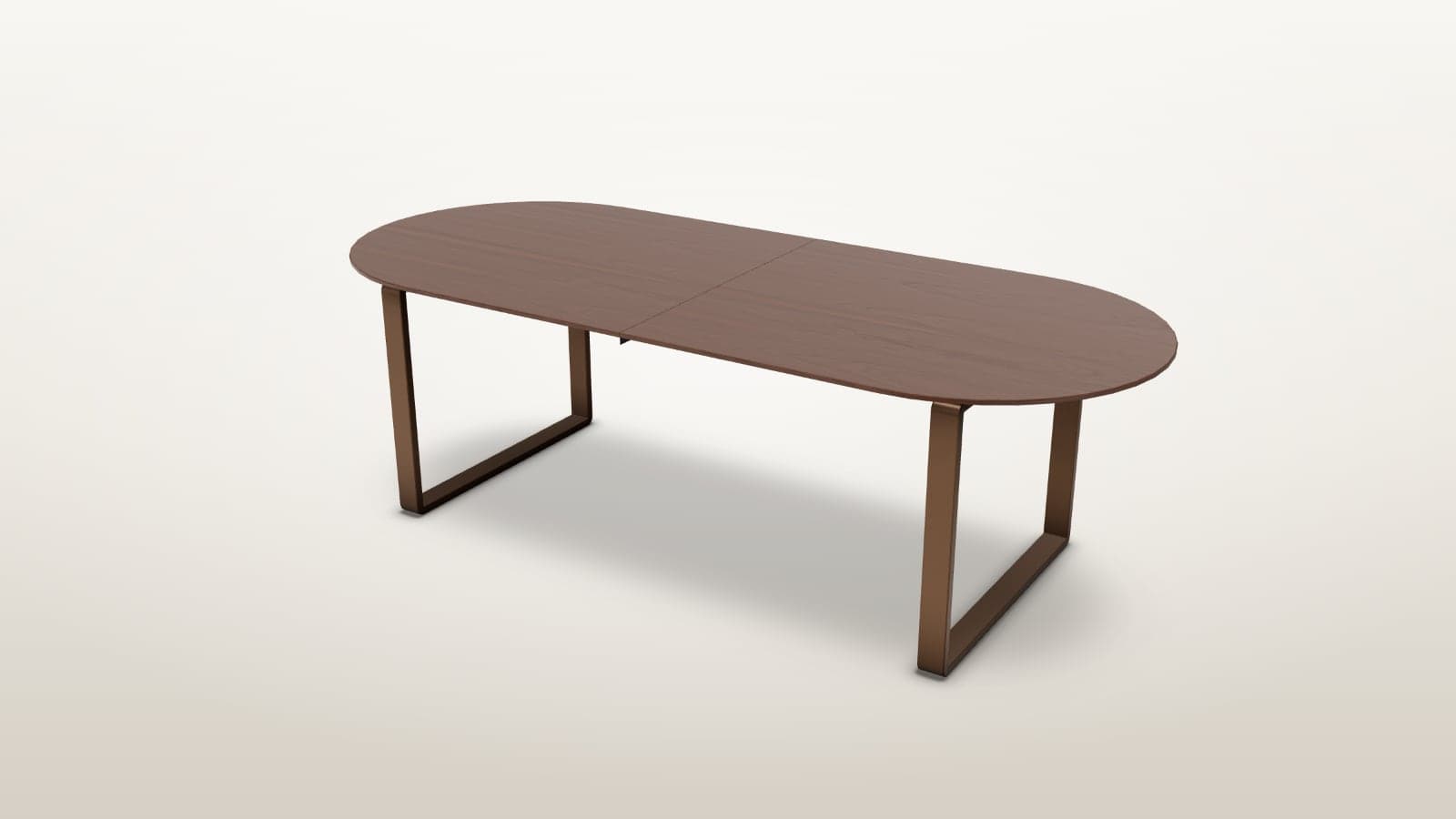
It re-renders. A market that wants the sofa in a lighter room with different flooring gets a render rather than a shoot. A new variant is a material swap. Once the model exists, the fortieth image costs close to nothing.
It has no language in it. No text, no props with local writing, no model wearing something that reads differently abroad. The same asset goes everywhere and the page around it is localised.
What it does not fix
A 3D model does nothing for shipping cost into a new country, customs paperwork, local payment methods, or a market that does not want your style. It does not replace local customer service, and it will not rescue a listing with a vague delivery date and a return address in another country.
What it fixes is the gap between what the customer imagined and what arrived. For bulky goods sold across a border, a return can cost more than the margin on the order.
Order of work
- Fix units, size conventions and the specification table in every language you sell in.
- Get hreflang right, with `x-default`, and verify it in Search Console.
- Translate the specification, care, assembly and returns content properly.
- Build 3D models for the products where size is the decision, and use them for the product page, AR, and market-specific renders.
- Measure the return rate per market before and after, because that is where the payback shows first.
Three of our clients went roughly this way. MELIMELI moved the in-store sofa experience, fabric browsing included, online for customers who mostly buy there. Sweef put a modular sofa into a configurator with web AR so the combinations are easier to understand. Contura had stove models built from the CAD files it already had and uses them online and in store.
If you are about to open a market and want to see whether a model makes a difference, send us one product. We build the 3D model for free and you keep it. Rollout pricing on prices starts at 10 dollars per product per month on Basic with a 12-month term and a 100-variant minimum, or 20 dollars per model per month on Value with a 24-month term. The solutions page lists what we build.
Sources
- Google Search Central, tell Google about localized versions of your page.
- Apple, AR Quick Look.
- Google, Scene Viewer.