Furniture and home4 min read
3D and AR for summer online sales of outdoor products
Garden furniture is bought for one patio. Where 3D and AR help with fit and scale, the sunlight limit, and why the models have to be finished in winter.
By CharpstAR · 25 Sept 2023 · Updated 7 Oct 2026

Garden furniture sells in a few weeks of the year, and the shopper buys it for one patio or one lawn that they can see from the kitchen window. The pieces are large, and a return means a van has to come and collect them. 3D and AR do a lot in this category. The one gap, sunlight, is described further down.
What the product photographs leave out
Photographs of outdoor furniture are taken in large gardens with nothing else in the frame, so the pieces look smaller than they are. The shopper has a patio with fixed measurements, a door that has to open onto it and a path along one side, and the photograph can't tell them whether a six-seat dining set leaves room to pull the chairs out. When the size turns out wrong on delivery, the set has often been assembled already, and the collection costs more than it would for a parcel.
Daylight is the other gap. Teak turns grey, powder coating glares in direct sun and cushion fabric fades over a few summers. Studio photographs show the set as new.
What AR does on a patio
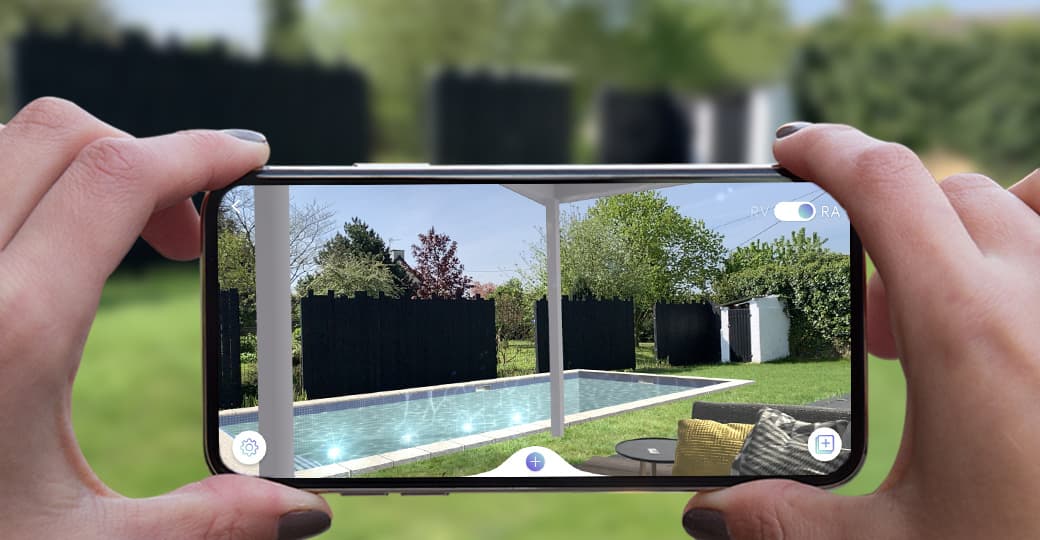
AR places a 3D model at its true size in the phone's camera view. The phone finds the ground and the model stands on it. A shopper on their own patio settles the fit question in the place the product will stand.
Tapping the AR button on a product page hands the model to the AR system already on the phone, Scene Viewer on Android and Quick Look on Apple devices. This counts for more outdoors than indoors. The shopper is standing in the garden with the phone in one hand and is unlikely to install anything to see the set.
Dimensions drawn on the model do a second job. The AR view shows whether the set fits the patio. The dimension lines answer the other question, whether the set goes through the side gate. Without them, that question tends to arrive as a support email a few days after delivery.

Example catalogue
Glass garden fence
€2,000
01 ShapeCorner
02 Parts7.5 m, 5 parts
New parts go at the purple +
Tap a part on the fence to add after it, or to take it out.
03 FinishBlack posts, clear glass
Posts
Glass
A glass garden fence put together from its parts. Add panels, a gate or a corner, and the measurements and the price are recalculated for the new fence.
Sunlight and ageing
The lighting in the 3D render and the change in colour over time are different problems.
A model with a properly built material reacts to light, and the AR systems sample the ambient light of the real scene, so a set placed on a sunny terrace is lit much as the terrace is.
Colour change over time isn't shown. A teak set silvers over two summers and a cushion fabric fades, and the model shows the set as new. If your customers buy partly on how the furniture will look in its third year, that has to be written on the page.
Direct midday sun is a separate problem. Surface tracking gets less reliable on uniform bright concrete, and the screen is hard to read. It still works, and it's easier in the evening than at noon.
Which products to model first
| Product type | Why it needs a model | Priority |
|---|---|---|
| Dining sets and lounge sets | Largest, most expensive to return, hardest to judge for fit | First |
| Parasols and awnings | Shoppers consistently misjudge the shade footprint | First |
| Grills and outdoor kitchens | Clearance, work height and space around them all matter | Second |
| Planters and pots | Scale is very hard to read from photography | Second |
| Play equipment | Whether it fits the garden decides the purchase | Second |
| Small accessories | Low return cost and little doubt | Skip |
Finishing the models in winter
The season opens on the first warm weekend. In northern Europe that falls anywhere between late March and mid May, and traffic rises within a day or two of the forecast changing.
Production for one product from a complete brief takes about a working week to your approval. Add revisions, your own sign-off and a developer afternoon to put the viewer in the product template. If the work starts when the sun comes out, the models go live near the end of the season.
Winter is also when the campaign images get made. Garden furniture can't be photographed in a summer garden in February, but it can be rendered. The same 3D asset that runs the product page produces the campaign images for ads and email, in a summer scene, months ahead. In our experience the renders are what get the budget approved, because the cost comes out of the photography line.
Returns in this category
We have no returns figure for garden furniture, and the general retail figures don't break it out. To get your own, take your three worst-returning outdoor products, record their return rate for one season and compare it with the next.
What to gather before January
A modeller needs photographs from every angle, including from underneath, full dimensions, folded dimensions where they apply, close-ups of the materials and the variant list. CAD files shorten the job considerably.
Test one product before you commit a season to it. We model one product at no cost, hosted and ready for your page, so you can judge the quality and watch how shoppers use it; send us one product. After that the plans start at 10 dollars per product per month.
Sources
- Google, Scene Viewer.
- Apple, AR Quick Look.