3D for e-commerce5 min read
Ten benefits of 3D and AR for e-commerce, and the evidence behind each one
Ten reasons retailers buy 3D and AR, each with either a number from a named source or an honest admission that nobody has measured it properly.
By CharpstAR · 21 Mar 2023 · Updated 22 Sept 2026

Every list of benefits for 3D and augmented reality in e-commerce has the same problem. It mixes things that have been measured with things that sound good, and presents them at equal weight. So here are ten benefits, in the order we think they matter, with the evidence stated plainly. Where a real source exists we name it. Where one does not, we say so and explain why we still believe the benefit is real.
1. Shoppers who interact with 3D convert more often
This is the headline claim and it does have support. Shopify said in September 2020 that products with 3D or AR content converted 94 percent more often than the same kind of products without it. Rebecca Minkoff, working with Shopify, reported that shoppers who viewed a product in AR were 65 percent more likely to buy, and that those who interacted with a 3D model were 44 percent more likely to add to cart.
Read those numbers carefully. They compare shoppers who chose to open the 3D viewer against shoppers who did not. People who open a viewer are already more interested. The effect is real, but part of it is selection, not causation. Treat the direction as trustworthy and the exact percentage as marketing.
2. Fewer returns, at least for some categories
Gunner Kennels reported a 5 percent reduction in return rates after adding AR, in the same Shopify write-up. That is a modest, believable figure, and it is one of the few return numbers attached to a named company rather than to an industry survey.
Returns are worth attacking. The National Retail Federation, with Appriss Retail, put US returns at 743 billion dollars in 2023, 14.5 percent of sales, with the online rate at 17.6 percent. Even a small percentage off a number that size pays for a lot of 3D models.
3. Size and fit questions get answered before checkout
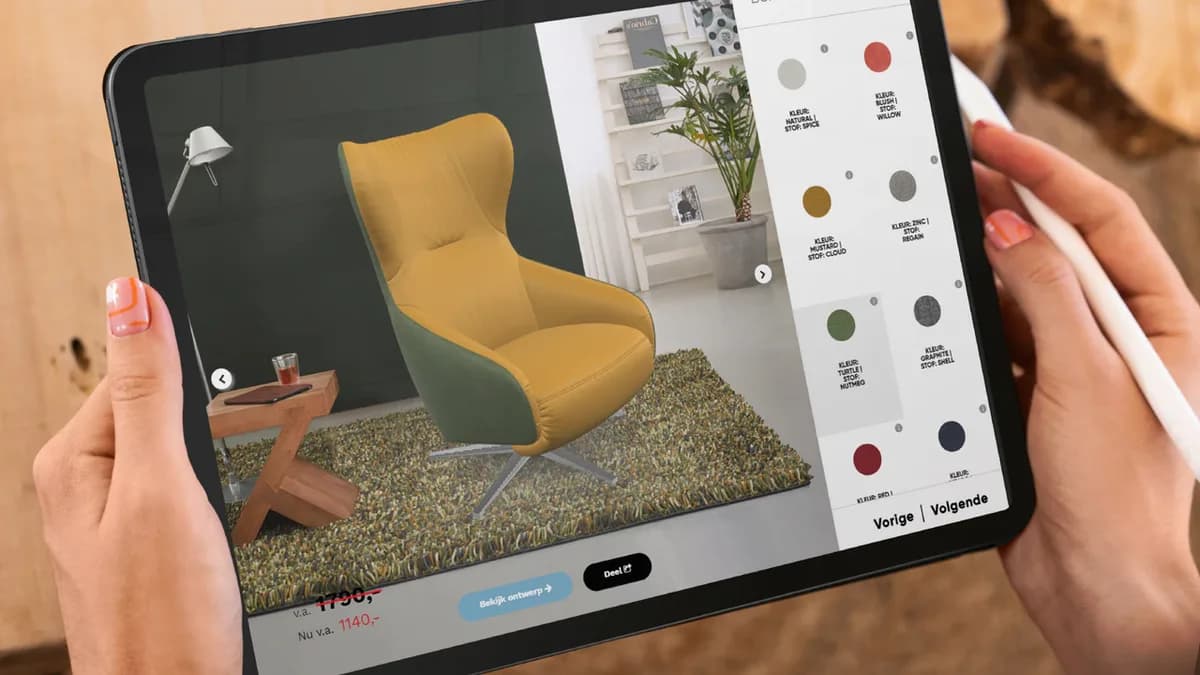
Unmeasured by us, and we will say so. What we can report is what our clients tell us. When Sweef put its modular sofas into a configurator, the support questions about whether a given combination would fit a room largely stopped. Nobody instrumented that, so we cannot give you a percentage. The mechanism is obvious enough that we believe it anyway: a model placed at real size in a room answers a question a photo cannot.
4. One 3D asset replaces many photo shoots
A single model can produce every angle, every colourway and every room scene you need, and it can do it again next season without booking a studio. This is a cost benefit rather than a conversion benefit, and it is the one our clients notice first on their own invoices.
We have no published figure for it because every retailer's photography budget is different. If you shoot ten products a season at studio rates, do the arithmetic yourself against our pricing and you will get a truer number than any industry average.
5. Product variants stop needing separate photography
MELIMELI sells sofas in dozens of fabrics. Photographing every combination is not practical. A configurator swaps the material on one model, which is the only sane way to show a catalogue that large.
6. AR works without an app
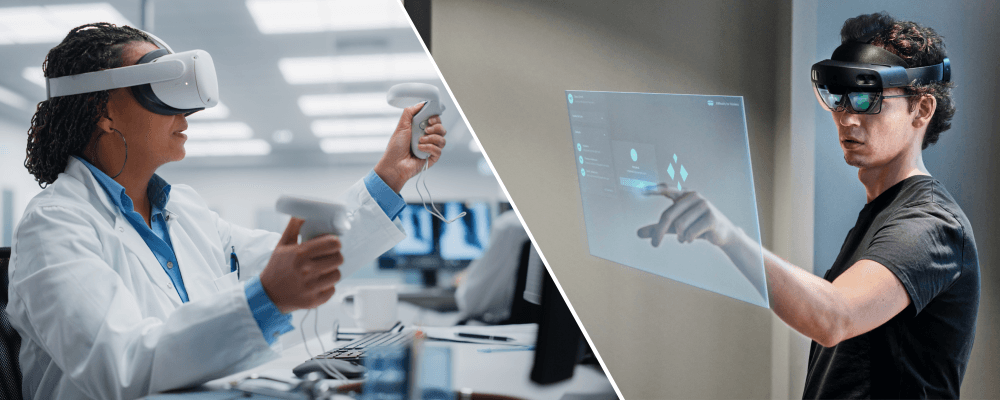
This one is simply a fact about the platforms. On Android, Google's Scene Viewer launches AR from a web link on any ARCore device running Android 7.0 or later. On iPhone and iPad, AR Quick Look does the same from Safari on iOS 12 and later. Neither requires the shopper to install anything.
Ten years ago AR meant an app download, and that killed adoption. It no longer does.
7. Longer time on the product page
Measured by everyone, published by almost nobody in a form you can check. A 3D viewer is an interactive element on a page that otherwise has none, and people play with it. Whether dwell time causes sales or just correlates with interest is genuinely unresolved. We list it here because it is a real, observable effect, not because it proves anything on its own.
8. The shopper can inspect details a photo flattens
Material, joinery, thickness, how a hinge works. Hotspots on a 3D model let you attach an explanation to the exact place on the product the shopper is looking at. For products where construction quality is the selling point, this is where the model earns its cost.
9. AR shifts the confidence problem for high-consideration goods
Contura sells wood-burning stoves. Most buyers have never bought one and cannot picture the scale in their own living room. Placing the stove in the room at true size removes the single biggest hesitation before an expensive order. We have no controlled test of this, only the observation that it is the feature the client asked us to build first.
10. The assets outlive the campaign
A photograph is made for one layout. A 3D model can be re-lit, re-posed and re-rendered for a catalogue, a banner, a marketplace listing and an AR view, for as long as you sell the product. This is the least glamorous benefit on the list and probably the most durable.
What the evidence adds up to
Three of these ten have a number attached to a named company. Four are facts about platforms or production workflow that need no study. The remaining three are things we believe from working on them daily and cannot prove to you with a citation. That mix is, honestly, the state of the field. Anyone presenting ten benefits with ten confident percentages is inventing at least half of them.
If you want a number for your own catalogue, the only reliable way to get one is to measure it. Pick one product, put a 3D model on its page, and compare conversion and returns against a comparable product for a month. We will build the first model for nothing so you can run that test. Send us one product and see what it does, or look at what we offer if you already know you want more than one.
Sources
- Shopify, merchant data on 3D and AR content, September 2020.
- Shopify, AR shopping: Rebecca Minkoff and Gunner Kennels results.
- National Retail Federation and Appriss Retail, 2023 Consumer Returns in the Retail Industry.
- Google, Scene Viewer developer documentation.
- Apple, AR Quick Look.