Fashion6 min read
Sustainable fashion: measuring 3D sampling and returns
Digital sampling and fewer returned parcels are savings a brand can count. Many other claims about AR and sustainability can't be backed up.
By CharpstAR · 4 Oct 2023 · Updated 22 Sept 2026
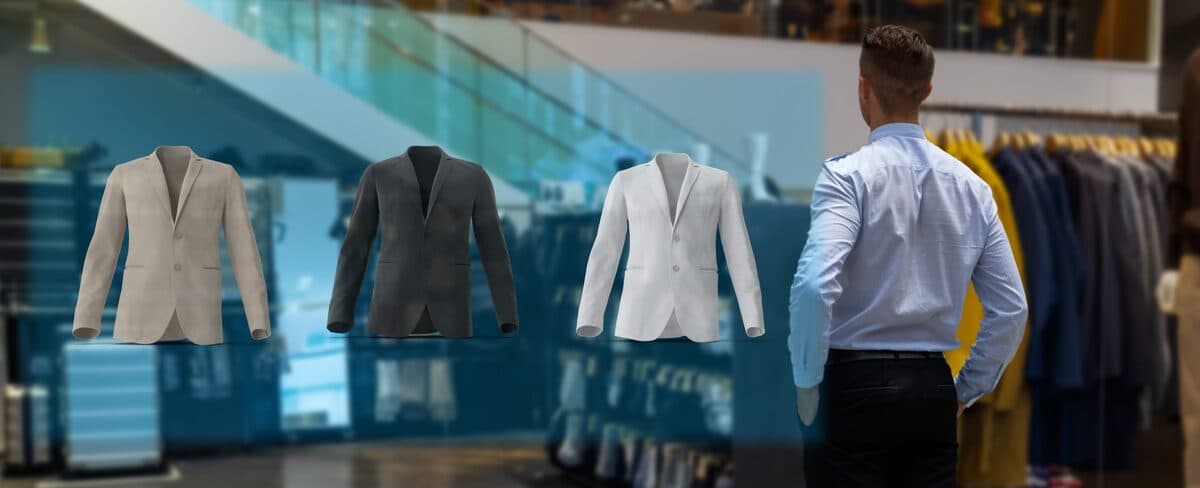
Every 3D and AR vendor in fashion has a sustainability slide, and we used to have one too. The slide usually says that digital products replace physical ones, that fewer things get shipped and thrown away, and that the technology is therefore green. Some of that is true and can be measured. Much of the rest is a figure given without a baseline, which makes it greenwashing.
This article separates the two. We sell 3D asset production, so keep that in mind as you read. The sources are linked at the bottom, and all of the links open.
How large fashion's footprint is, from public sources
The European Environment Agency measured the environmental cost of an average European's textile consumption. In 2020, per person, that was about 15 kilograms of clothing, household textiles and shoes, requiring 391 kilograms of primary raw materials, 9 cubic metres of blue water, 400 square metres of land, and producing about 270 kilograms of CO2 equivalent. The agency also notes that roughly 80 percent of those impacts happen outside Europe, in the countries where the material is grown and the garment is sewn.
The European Parliament's figures for 2022 are higher, at 19 kilograms of textiles consumed per person and about 355 kilograms of CO2. They also say that only about 1 percent of used clothing is recycled into new clothing.
These figures are the baseline. Anything 3D does in fashion affects a fraction of them.
What can be measured: samples
The clearest environmental case for 3D in fashion doesn't involve the shopper. It comes before the product exists.
In a physical sampling round, a factory cuts and sews a garment and couriers it across a continent. A design team looks at it, and most of the time it gets changed or dropped. Textile World, citing industry figures, reports that around 40 percent of physical samples never reach production, and that a quarter of the textiles reaching landfill are samples that were looked at fewer than twice. Digital sampling reduces that waste, because fit and colourway are settled in software and only the versions that survive get sewn.
You can measure this because your company already counts it. You know how many sample rounds a style took last season and what each one cost in air freight. If digital sampling takes a style from four physical rounds to two, you can put that number in a report and defend it without relying on anyone's marketing statistic.
There is a limit. Digital sampling only helps if your team stops ordering the physical samples. A brand that runs both processes side by side saves time and no material.
What can be partly measured: returns
The second saving is parcels that never come back. The National Retail Federation and Appriss Retail put United States returns at 743 billion dollars in 2023, about 14.5 percent of sales, with the online rate at 17.6 percent. Each return means a van journey, packaging and handling, and some returned items are thrown away.
Better product information reduces returns, and few people dispute that. A shopper who has seen the true dimensions, the real fabric and the item on a body close to their own orders the right thing more often. Shopify's merchant data from 2020 showed that product interactions involving 3D or AR content converted 94 percent more often than comparable products without, and Rebecca Minkoff reported that shoppers who viewed a product in AR were 65 percent more likely to buy.
Those figures measure conversion. They do not measure returns. A higher conversion rate and a lower return rate are separate claims, and vendors sometimes present one as if it were the other. If someone tells you AR cuts returns by a specific percentage, ask for the study, the product category and the sample size. In our experience the effect is there for products where the doubt is about size and space, and much weaker where the doubt is about fit on a body.
You can measure this yourself with a plain test. Take twenty products and record their return rate for a quarter. Add 3D and AR and record it for another quarter. Compare like with like, in the same season and at the same discount level. The result is your own number, and you know how it was produced.
Claims that cannot be measured
The table below lists claims that cannot be supported.
| Claim you will hear | Why it does not hold up |
|---|---|
| "Digital garments have no carbon footprint" | Rendering, hosting and CDN delivery all use electricity. The footprint is small compared to a cotton t-shirt but above zero, and we have not seen a published method for measuring it. |
| "AR reduces overproduction" | Overproduction is a planning and forecasting problem. A viewer on a product page does not change how many units a buyer commits to. |
| "Virtual try-on ends size returns" | Garment try-on today approximates a body. It helps a shopper judge the style but cannot measure their shoulders. |
| "3D makes fashion circular" | Circularity is about materials and recycling infrastructure. Only about 1 percent of used clothing becomes new clothing, and a viewer does not change that. |
| "One 3D model saves X tonnes of CO2" | Without a stated baseline, a boundary and a method, the number cannot be checked. Ask what the model replaced. |
Claims about your own operations can be defended, because you can count them. Claims about the planet need a life-cycle assessment, and without one they can't be backed up.
What we build and which claims our work supports
We build 3D models and web AR for furniture, stoves and home products more than for apparel, so most of our evidence comes from those categories. Sweef sells modular sofas through a configurator, so one 3D asset covers every fabric and layout combination and no variant needs its own photo shoot. MELIMELI uses the same model to produce marketing images, so a new colourway does not need a new set. Contura lets a customer stand a wood-burning stove in their own room at real size before ordering. Doubt about size is what leads to expensive returns in that category.
We can say that one 3D model replaces repeated photography of the same product, and that a correctly scaled AR view answers the size question, which is a common reason for furniture returns. We cannot state how many tonnes of CO2 this saved, because we did not measure it.
How to use this in sustainability reporting
If sustainability reporting is part of your job, "AR is green" is too vague to report. What you can report is that 3D assets let you make fewer physical things during development and ship fewer things back after sale, and both already show up in your cost data. Start by counting sample rounds per style and return rate per category. Then change one variable and count again.
To test the returns part on your own catalogue, pick the product with your worst return rate and the most size-related complaints. We'll build a 3D model of it for free so you can put it live and watch the return rate. Send us one product, or look at what the plans cost if you decide to go further. Basic starts at 10 dollars per product per month on a 12-month term. Value is 20 dollars per model per month and includes five rendered images and a 360 viewer. Both have a minimum of 100 products or variants.
Sources
- European Environment Agency, Textiles and the environment: the role of design in Europe's circular economy (2020 per-person figures).
- European Parliament, The impact of textile production and waste on the environment (2022 figures).
- Textile World, feature on the benefits of 3D digital sampling, March 2024.
- National Retail Federation and Appriss Retail, 2023 Consumer Returns in the Retail Industry.
- Shopify, merchant data on 3D and AR content, September 2020, and AR shopping.