Fashion5 min read
3D fashion e-commerce: digital garments and AR try-on are two different tools
3D garment software like CLO and Browzwear solves design and sampling. AR try-on solves shopper confidence. Knowing which one you need saves a lot of money.
By CharpstAR · 22 Sept 2026
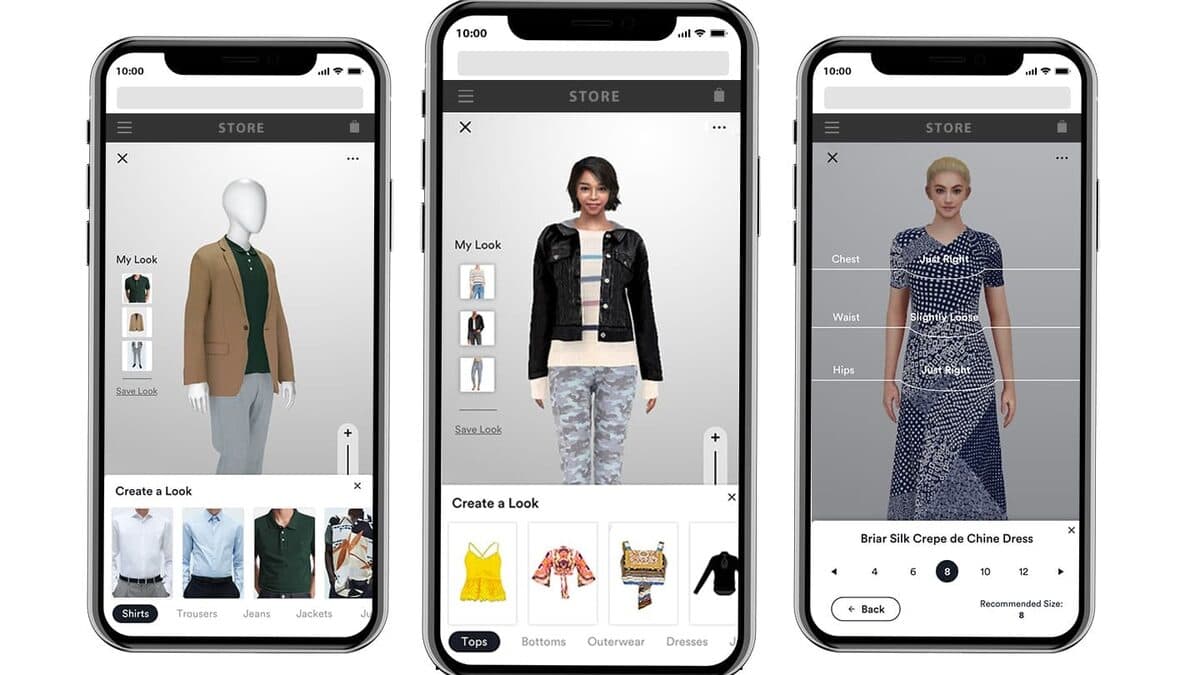
Two very different things get filed under 3D in fashion, and confusing them wastes budget. One is digital garment creation, the CLO and Browzwear world, where a garment is built from patterns and simulated on a virtual body during design and sampling. The other is AR try-on, where a shopper points a camera at themselves and sees a product on their face or body. They use different software, sit in different departments, are bought for different reasons and produce different returns.
This piece separates them, says what each is genuinely for, and explains where they meet.
3D garment creation: a supply chain tool
In CLO 3D, Browzwear, Optitex or Style3D, a designer draws or imports flat pattern pieces, assembles them onto a virtual avatar, and the software simulates how the fabric behaves: drape, stretch, fit, how a seam pulls. The garment exists before anything is cut.
The reason brands buy it is time and waste, not marketing. Browzwear describes traditional sampling as adding four to six weeks to the apparel calendar, and says 3D lets teams run the whole digital sampling process without committing to fabrics, saving up to 80 percent of fabric waste. Each avoided physical sample also avoids a round of international shipping and a week of waiting.
The knock-on effects are where it gets interesting for e-commerce. Once a garment exists as an accurate digital file, colourways cost nothing to produce, fit can be reviewed across sizes before production, and stakeholders approve from a screen. Some brands go further and use the same file for on-model imagery instead of a photo shoot, which is the moment the design tool starts paying for the marketing department too.
The limits are real. Simulation quality depends on accurate fabric data, which has to be measured, and a simulated garment is a good prediction rather than a photograph. Teams need training. The investment is a change to how a product development department works, not a plug-in.
AR try-on: a shopper confidence tool
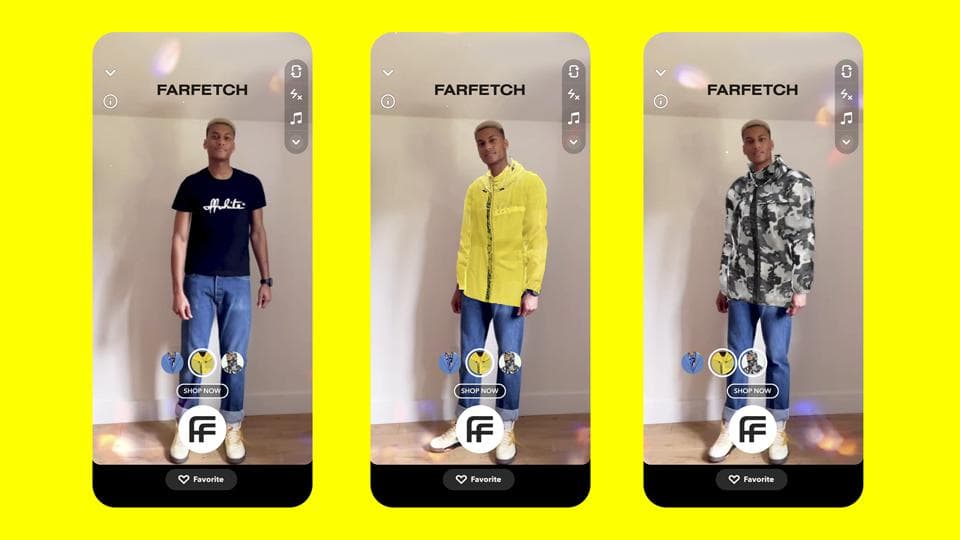
AR try-on lives on the product page. It answers the shopper's question, not the designer's, and its accuracy depends almost entirely on how rigid the product is.
It works well on eyewear, where Shopify's guide describes Warby Parker using Apple's ARKit to scale and align frames to the shopper's own face geometry, and where Fittingbox research cited in the same guide found 54 percent of shoppers who were not ready to buy glasses online wanted to check the frames fit properly, with 29 percent having already used virtual try-on at least once. It works reasonably on watches, jewellery and bags.
On garments it is a styling preview. Fabric on a moving body is not a solved problem, and no phone camera measures a shopper's proportions precisely enough to turn a preview into a fitting. Snapchat reports 63 percent of users think virtual try-ons make purchase decisions easier, which tells you shoppers like it, not that it is accurate.
Which one solves which problem
| Your problem | The tool | Why |
|---|---|---|
| Sampling is slow and expensive | 3D garment software | Fewer physical samples, weeks off the calendar |
| Too many colourways to photograph | 3D garment software, or 3D product models | Colour is a material change, not a shoot |
| Shoppers cannot tell if a frame suits them | AR try-on | Rigid product, tracked face, direct answer |
| Size returns on trousers and dresses | Neither, mostly | Size charts, fit notes from returns data, and size recommendation do more |
| Shoppers cannot judge a bag's real size | AR placement | True-scale view settles it |
| Product pages feel flat next to competitors | 3D product models in a viewer | Rotation and zoom, no app, one file |
The row worth staring at is the size-returns one. It is the problem most often used to justify both tools and the one neither reliably fixes. The National Retail Federation and Appriss Retail put United States returns at 743 billion dollars in 2023, 14.5 percent of sales, with online at 17.6 percent. Apparel is a large slice of that, and the measures that move it most are unglamorous: accurate measurements on the page, fit notes drawn from what actually came back, and recommendations based on the shopper's own purchase history.
Where the two meet
They meet at the asset. A garment built in CLO or Browzwear can be exported to a web-friendly format and loaded into a product-page viewer, which means the design file becomes the e-commerce file. That is the strongest argument for 3D in fashion, because it changes the economics: you are not commissioning models for the website, you are reusing something the product team already built.
Most brands are not there yet. Export pipelines need work, file weight has to come down for the web, and design files carry detail the page does not need. But the direction is clear, and it is why a brand deciding between the two tools today should lean towards the one that produces a reusable, accurate asset.
What this looks like in categories that already work
Our own work is furniture and home products rather than apparel, and the reason it is instructive is that the asset-first argument is already fully played out there. MELIMELI sells sofas across many upholstery options. Photographing every combination is impossible, so the model carries the fabrics and the shopper switches them on a live product. Sweef does the equivalent for modular layouts. In both cases one accurate model feeds the page viewer, the AR button and every still image used elsewhere on the site.
Fashion's equivalent is the digital garment. The brands that treat 3D as a source asset rather than a feature will get the page experience almost free, and the ones that buy a try-on widget on its own will be buying the same thing again in two years.
If you are deciding this quarter
Ask where the pain is. If it is in product development, sampling cost and speed, buy 3D garment software and budget for the training and fabric data that make it work. If it is on the product page, start with the rigid parts of your range where AR is proven, and put real measurements and fit notes on everything else first, because they are cheap and they move the number.
If part of your range is hard goods, accessories or home products, that is the piece we build. We will model one product for free so you can put it on a page and measure it yourself: free sample. The solutions page covers the rest, and pricing is on the prices page.
Sources
- Browzwear, benefits of 3D clothing design software.
- Shopify, AR shopping: Warby Parker, Fittingbox and Snapchat figures, and 3D ecommerce guide.
- National Retail Federation and Appriss Retail, 2023 Consumer Returns in the Retail Industry.