3D for e-commerce6 min read
What AR and 3D show people who buy a car online
The stages of buying a car online, which ones 3D and AR cover, and which still need the shopper to sit in the car and drive it.
By CharpstAR · 4 Oct 2023 · Updated 22 Sept 2026

Most of the paperwork for a car can now be done online, but few people make the decision there. They research on a screen for weeks and then go to a dealer to sit in the car. Some of those dealer visits are necessary. Others happen only because the website could not answer a question, and those are the ones a seller can do something about.
3D and augmented reality answer some of those questions. This article goes through the buying journey stage by stage and says which questions they answer.
We build 3D models, web viewers, configurators and web AR. Most of our clients sell furniture and home products, so this article is not based on automotive case studies of our own. The technique works the same way for a car, and it has the same limits.
Stage one: shortlisting
A shopper narrows twenty candidates to four, mostly on price, body type, range or fuel, and reputation. They do this with search and specification data.
3D does almost nothing at this stage, and a heavy configurator on a comparison page only slows it down. Fast pages and clear specifications matter most here.
Stage two: appearance
Next the shopper wants a proper look at the car, in the colour they are considering and on the wheels they would pick.
3D can take over from photography completely at this stage because of the number of combinations. Ten paints and six wheel options make sixty photo sets before trim is counted. One well-built 3D model covers all of them, and it stays correct when the option list changes next year.
A real-time model can also be rotated. Car photography is shot from flattering angles. A shopper who can look at the car from their own eye height, from the rear three-quarter and from directly behind gets a more accurate impression, and fewer buyers are disappointed on delivery.
For appearance, 3D does everything a dealer visit would.
Stage three: size
Every specification sheet gives length, width and height, but very few people can picture 4.7 metres on their own drive.
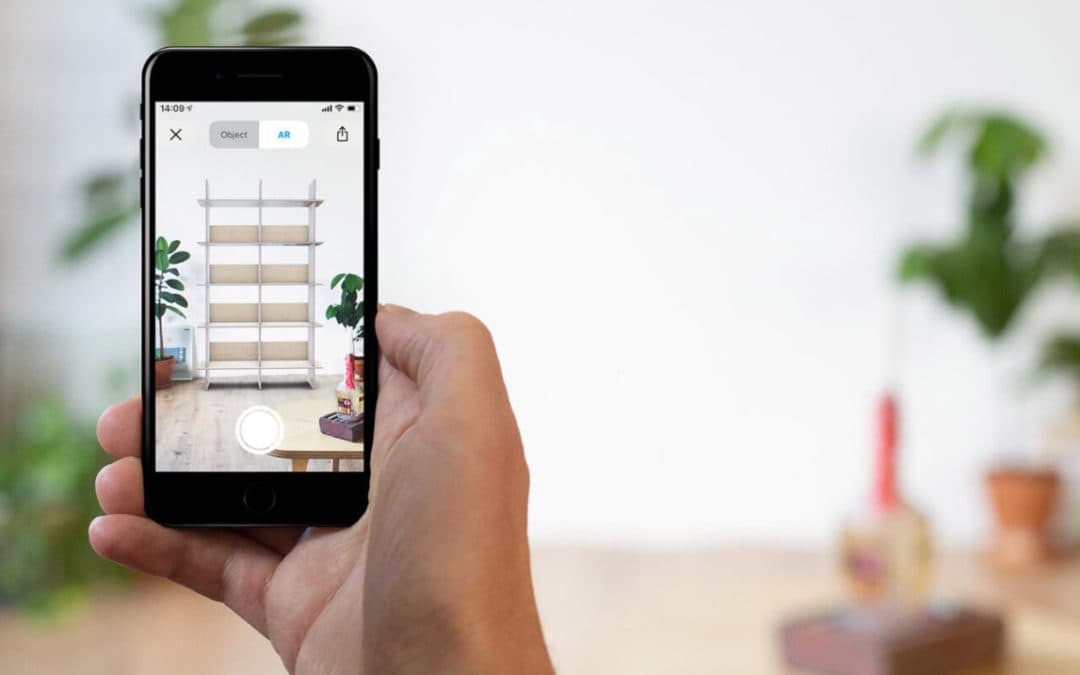
AR is made for this question, and no other stage in the journey suits it as well. The shopper places a correctly scaled model on the driveway through the phone camera and sees whether the car fits beside the house, whether the garage door clears it and whether two cars fit on the drive. Both mobile platforms have this built in, Android through Scene Viewer and Apple through AR Quick Look, so there is no app to install.
The scale must be exact. A model that is a few percent off still looks convincing and gives the shopper a wrong answer.
AR replaces the visit here. It also answers something the visit can't, because the dealer's forecourt tells the shopper nothing about their own driveway.
Stage four: the boot and the practical questions
Shoppers ask whether a pram fits, whether two bikes go in with the seats down and whether the load lip is too high.
3D and AR answer these in part. A 3D interior model with real dimensions goes a long way, and a shopper who places the open boot at real size in their own garage can hold a pram next to it. A screen can't show how awkward the loading is, with the angle, the lip and the weight of what is being lifted.
Fewer people need to check the boot in person once 3D and AR are on the page, but some still will.
Stage five: the interior and materials
How the cabin feels gets less attention than it should. A 360 interior view shows layout, screen size, seat shape and trim colour, which is useful. It can't show how the plastics feel, how supportive the seat is over an hour, how much road noise gets in or whether the driving position suits a tall person.
3D shows how the interior looks. The shopper still needs to sit in the car to judge how it feels.
Stage six: the drive
A screen cannot stand in for a test drive, and a seller who claims it can will give a useful tool a bad name. Ride, steering weight, visibility and the way the gearbox behaves in traffic are all physical.
Stage seven: accessories and configuration
Roof boxes, bike racks, towbars, floor mats, winter wheels and camper modules get little attention in automotive e-commerce, and they are the easiest place to start.
The shopper's questions are concrete. Does it fit my vehicle? How big is it? How does it look on the car? A rotatable 3D model with dimensions on the object, AR placement at true size and your existing fitment data answer all three. An accessory is also much quicker to model than a whole vehicle.
For accessories, 3D and AR can replace the visit entirely.
| Stage | What the shopper asks | Can 3D and AR settle it? |
|---|---|---|
| Shortlist | Which cars qualify? | No, this is search and specs |
| Appearance | What does it look like in my colour? | Yes, fully |
| Size and space | Does it fit my drive and garage? | Yes, better than a dealer visit |
| Boot and practicality | Will my things fit? | Partly |
| Interior feel | Is the cabin right for me? | Visually yes, physically no |
| Driving | How does it drive? | No |
| Accessories | Does this part fit and how does it look? | Yes, fully |
What this means for a dealer or a smaller brand
The table shows that 3D and AR remove the visits that were about looking and measuring. The visits that are about sitting and driving remain. That suits the dealer. A shopper who arrives already sure about colour, wheels, footprint and accessories needs a shorter conversation and is closer to buying than one who arrives to browse.
We would do it in this order. Model one vehicle line properly, exterior first, with the paint and wheel options that people argue about. Put the viewer in the main image gallery rather than below the buy button. In our experience, poor placement is a common reason for a project to fail. Add AR placement, which takes little extra work once the model is real-time. Then move on to accessories, where the return on modelling time is highest.
What to expect from the numbers
We know of no automotive conversion dataset we would rely on, so the evidence here comes from retail more broadly. Shopify's merchant data from September 2020 found that interactions with products carrying 3D or AR content converted 94 percent more often than comparable products without. In Shopify's write-up on AR shopping, customers were 27 percent more likely to place an order after interacting with a product in 3D, Rebecca Minkoff reported a 65 percent purchase lift on AR-enabled pages, and Gunner Kennels cut return rates by 5 percent. The same write-up cites Chatmeter's 2025 report, which found that 52 percent of people choose in-person shopping over online because they want to experience and try products in person. That finding is a reminder of how much a screen leaves out.
Measure your own results. For a dealer, enquiry quality and time to decision say more than conversion on the page.
How the same thing looks in another category
Sweef sells modular sofas, where the question is which combination fits the room, so the shopper configures the sofa and places it at true size. MELIMELI handles a large upholstery range as textures on one model, which saves a long run of photo shoots. Contura sells wood-burning stoves to people who have never bought one, and placing the model in their own living room is what settles the order. The same approach applies to cars, with paint in place of fabric and the driveway in place of the living room.
To see it on your own product, send us one. We build the 3D model and put it in a live viewer as a free sample, and the model is yours to keep. The solutions page covers what else we build, and prices are published.